Views: 375 Author: Publish Time:2026-08-26 09:30:00 Origin: Fun Pet
A retail pet bed must balance comfort, appearance, washability, shipping volume and repeatable production. Buyers choosing a custom pet bed manufacturer should define the animal, bed structure, finished size, cover fabric, filling and cleaning method before comparing unit prices. A clear specification prevents two visually similar beds from being quoted with very different internal constructions.
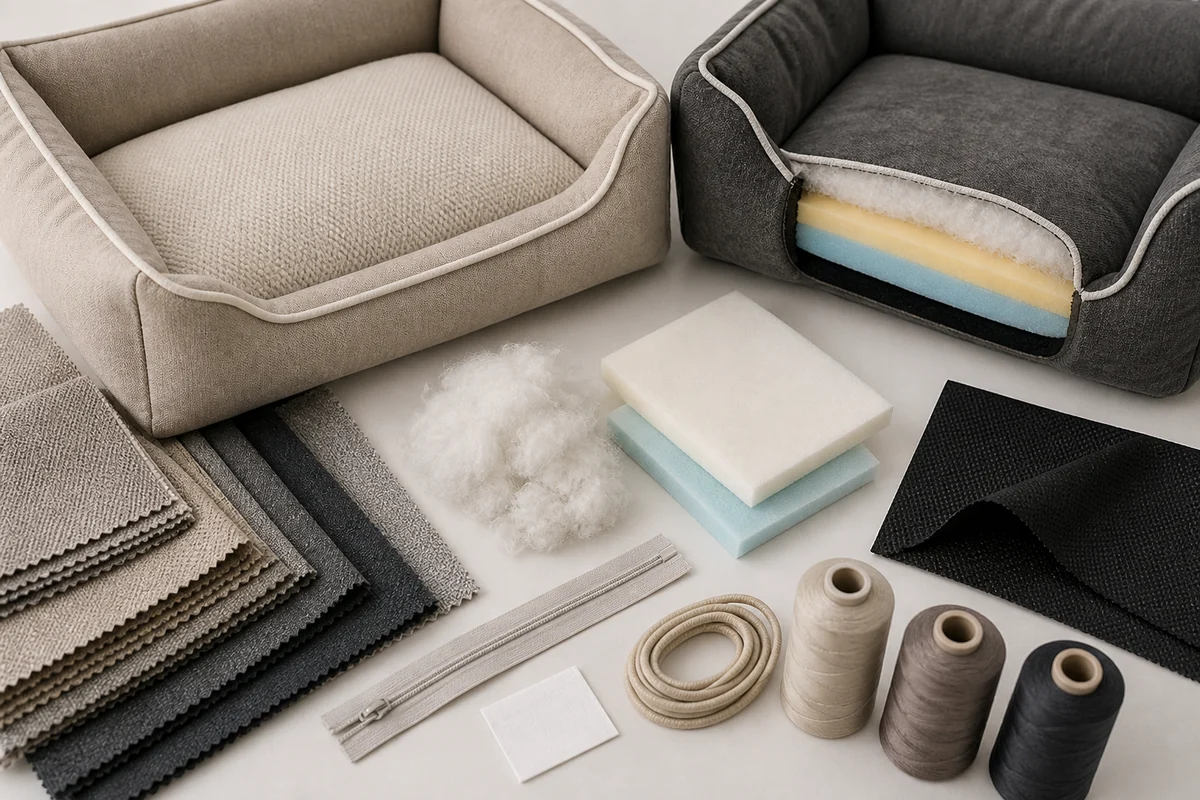
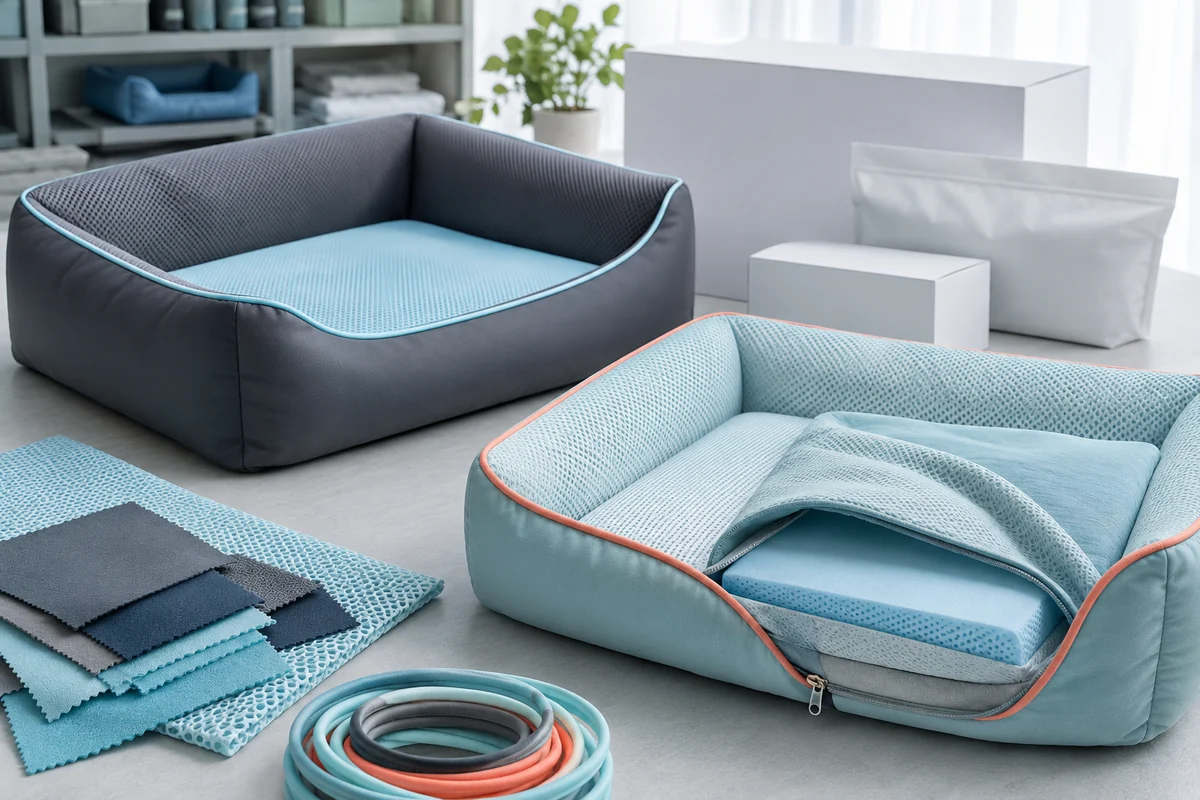
State whether the project is a flat mat, bolster bed, donut bed, cave, cooling bed, orthopedic design or travel product. Record target pet size, sleeping behavior, indoor or outdoor use, target price, sales market and packaging limits. Browse wholesale pet bed products and compare the wider pet bedding range to choose a suitable starting construction.
| Fabric direction | Typical use | Approval checks |
|---|---|---|
| Woven polyester | Durable everyday beds | Abrasion, pilling, colorfastness and hand feel |
| Velvet or short plush | Soft premium appearance | Pile direction, shading, shedding and cleaning |
| Canvas or cotton-look fabric | Lifestyle and natural positioning | Shrinkage, seam strength, stains and care |
| Coated or outdoor fabric | Easy cleaning and moisture resistance | Coating adhesion, odor, flexibility and seam exposure |
Specify fabric composition, weight, color reference, backing and required treatment. Claims such as waterproof, recycled or antimicrobial need a defined test or supporting documentation appropriate to the sales market.
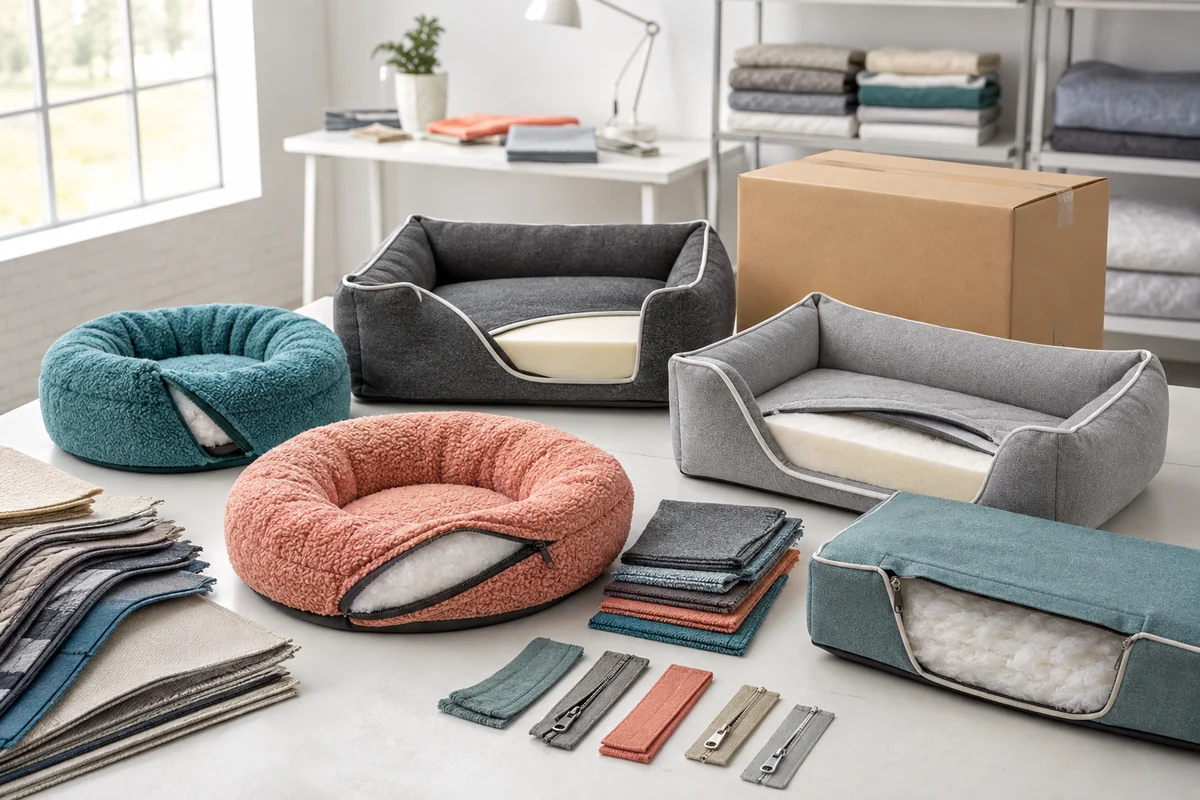
Polyester fiber creates a soft, compressible bed; foam provides a more controlled shape; layered or shredded foam can support premium positioning. Define filling type, density or weight, thickness and permitted tolerance. If a bed uses separate base and bolster inserts, specify each component individually.
Evaluate recovery after compression, odor, lumping, migration and edge support. The finished bed should be reviewed after the same packing and recovery period planned for bulk shipments.
Decide whether the complete bed, outer cover or separate inserts are washable. Locate zippers where they remain accessible but do not create an uncomfortable contact point. Check slider quality, opening length, seam reinforcement and whether the inserts can be removed and replaced without distortion.
Care labels should match the approved materials and construction. Do not promise machine washing until the finished product has been evaluated using the intended care cycle.
Define finished length, width, height, sleeping area and bolster dimensions. Record how the bed is measured after filling and conditioning. Piping, quilt lines, handles, anti-slip bases, embroidery and labels need dimensioned locations. Approve acceptable variation in loft and shape because soft goods do not behave like rigid products.
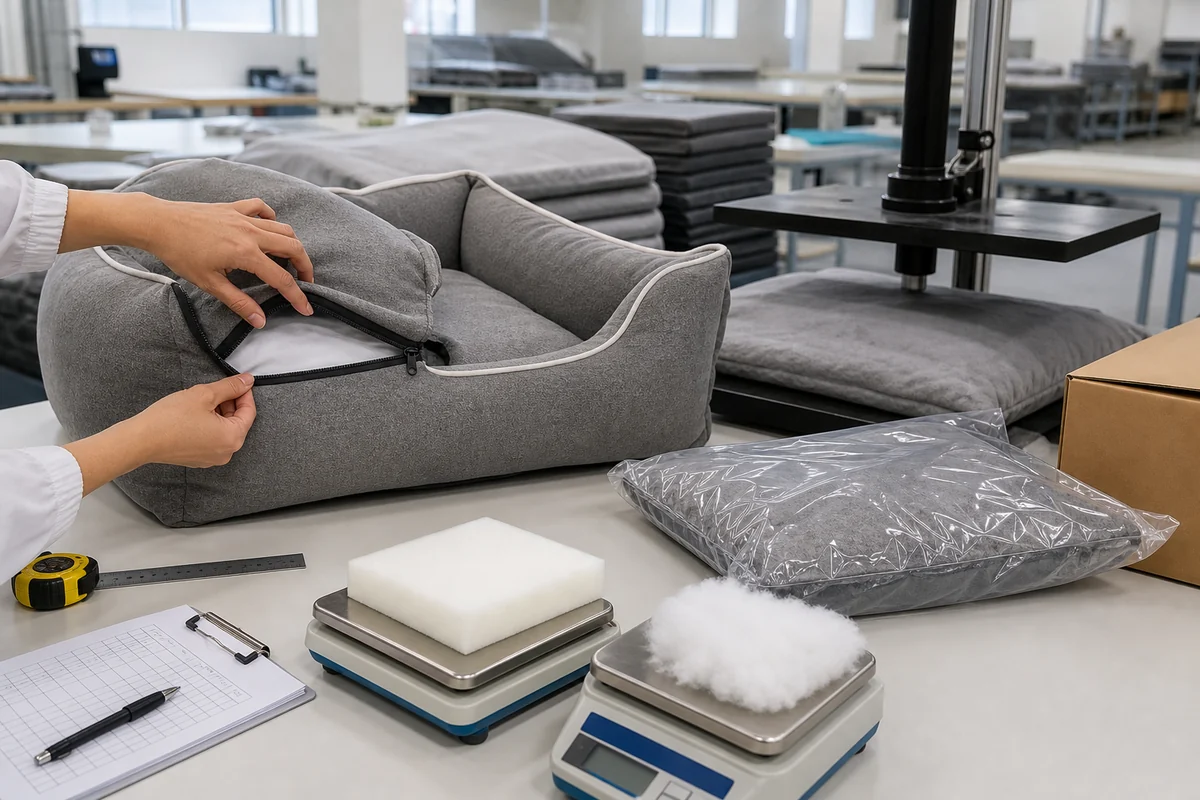
Inspect fabric, color, odor, finished dimensions, filling weight, seams, zippers, piping, labels, base material and cleanliness. Where relevant, agree on seam strength, colorfastness, wash, abrasion, compression recovery or component-security checks. Test methods and acceptance criteria should be confirmed before bulk production.
Pet beds can have a low unit weight but a high shipping volume. Compare normal packing, compression bags and vacuum packing with attention to recovery time, crease risk and retail presentation. Request carton dimensions, units per carton and gross weight before confirming landed cost. Packaging should include size, color, barcode, care and origin information.
Request a wholesale pet bed quote with these details. Fun Pet can then recommend a sampling sequence and compare constructions on the same basis.