Views: 327 Author: Publish Time:2026-08-14 10:20:00 Origin: Fun Pet
Pet bandanas are compact, visual, and easy to coordinate with seasonal collections, events, shelters, subscription boxes, and matching walking sets. A successful custom pet bandana order still needs clear decisions about wearing format, fabric, finished dimensions, print method, artwork placement, sewing, labels, and size assortment.
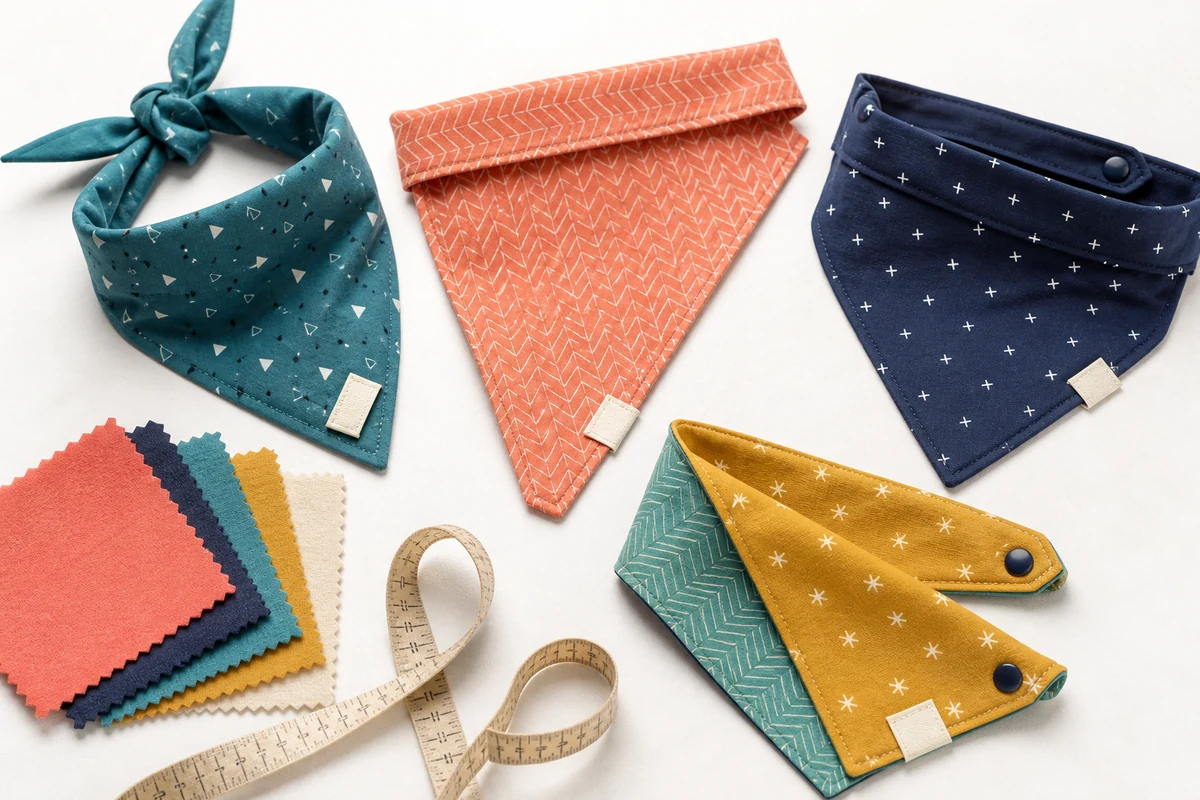
Tie-on bandanas provide an adjustable traditional look but require enough tie length and secure edge finishing. Over-the-collar bandanas slide onto the pet's existing collar, reducing loose ties but making the collar-channel width important. Snap bandanas offer defined adjustment points, while reversible designs create two visual sides and additional sewing work.
Choose the format for the intended customer and sales channel. The product should include clear use and size information rather than relying only on a styled photo. View Fun Pet's custom pet bandana options for base constructions.
Define measurements on a diagram: top width, center drop, tie length, collar-channel width, snap positions, and finished edge allowance. The same label such as small or medium can represent different dimensions across brands, so the purchase order should always include measurements and tolerance.
For over-the-collar styles, confirm maximum collar width and buckle size because the buckle may need to pass through the channel. For tie-on products, specify whether the width includes the tie extensions. Test samples on representative collar sizes or fit forms before approving the range.
| Fabric direction | Useful qualities | Points to approve |
|---|---|---|
| Polyester woven fabric | Suitable for vivid sublimation and repeat patterns | Weight, weave, opacity, hand feel, color, and heat response |
| Cotton or cotton blend | Natural appearance and familiar textile feel | Shrinkage, wrinkles, print method, color variation, and care |
| Brushed or specialty fabric | Seasonal texture and premium presentation | Bulk, edge finish, print limits, shedding, and wash behavior |
| Recycled-content fabric | Supports a material story when documentation is available | Supplier documentation, color consistency, claims, and MOQ |
Sublimation is well suited to polyester and can produce detailed all-over designs. Screen printing can work for bold spot-color logos or graphics, while digital textile printing may suit selected fabric and artwork combinations. Embroidery and patches create texture but add weight and may affect how the bandana drapes.
Ask for a strike-off or printed sample using the actual fabric. Screen previews cannot fully represent color, ink spread, fabric texture, or the effect of a print near a folded hem.
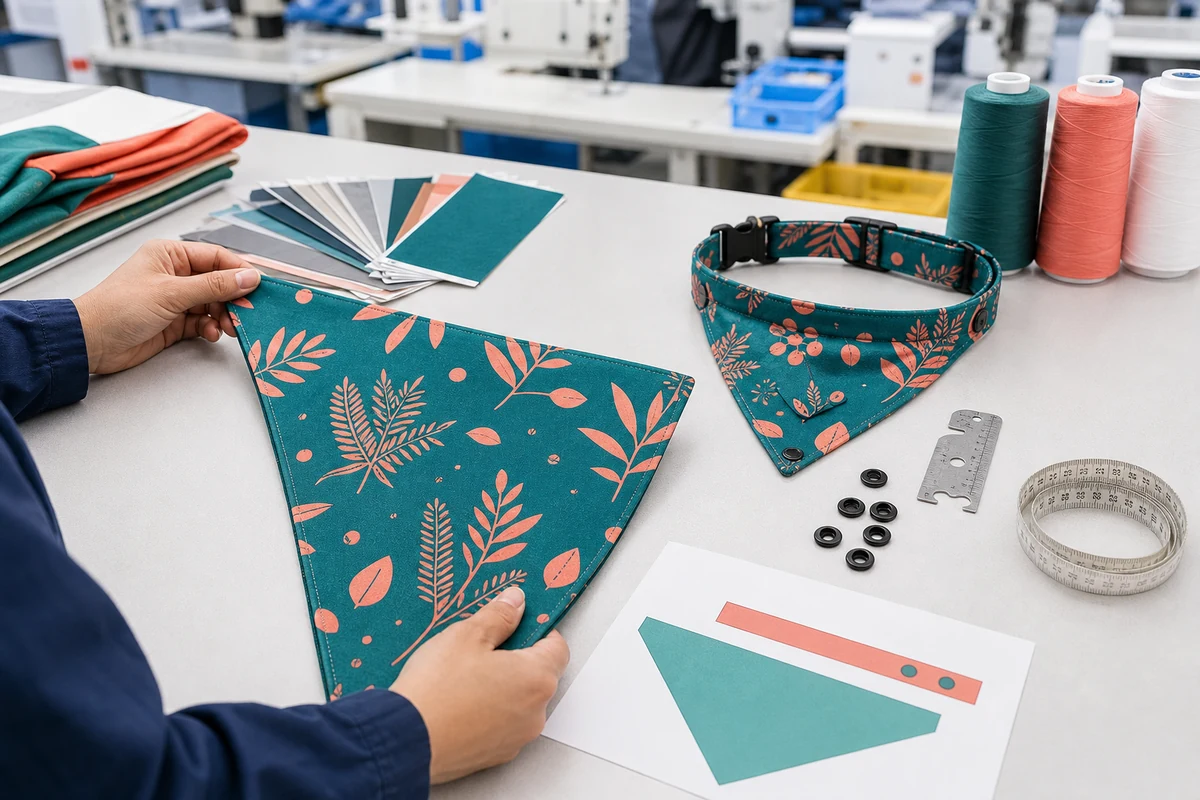
Bandanas are often cut as triangles or shaped panels, so important artwork can disappear into seams or corners. Supply the final dieline with bleed, safe area, center line, seam allowance, channel, and fold positions. State whether pattern placement is controlled, centered, mirrored, or intentionally random.
For repeating prints, review scale on every size. A pattern that looks balanced on a large bandana may become crowded on the smallest size. If the logo must remain consistent, place it as a separate controlled element rather than relying on random repeat placement.
Approve edge type, hem width, stitch density, thread color, corner shape, and loose-thread standard. Narrow rolled hems, folded hems, binding, and double-layer reversible construction produce different costs and visual results. Check that collar channels remain open and snaps are aligned.
Reversible bandanas need both sides reviewed after turning and pressing. Uneven layers, twisted seams, bulky corners, or show-through from the opposite print can reduce the finished appearance.
Woven labels, printed labels, embroidery, heat transfers, rubber patches, hang tags, and belly bands can identify the brand. Position labels away from the pet's neck and away from important artwork. Provide logo dimensions and placement by size instead of using an unscaled instruction such as "same position on all sizes."
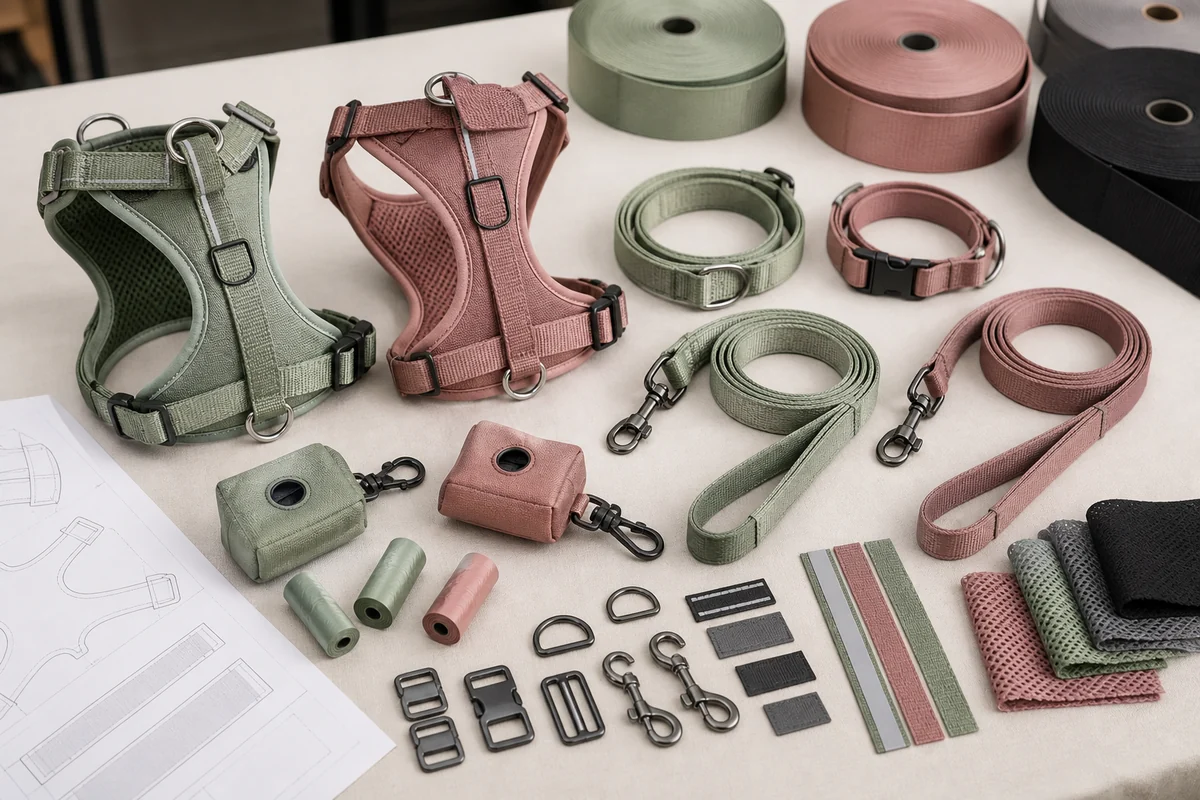
Bandanas can also coordinate with matching walking sets. Use shared colors or patterns while allowing each material to reproduce color differently.
Review fabric, print, measurements, drape, fit method, seam quality, label, hang tag, folding, barcode, and package. If the product is intended for photography or events, inspect how the print reads when worn rather than only when laid flat.
Bulk inspection should verify quantity by design and size, measurements, visible defects, print orientation, color consistency, hems, snaps, labels, and packaging. Randomly sample across cartons and artwork versions.
A clear dieline and size matrix allow the supplier to calculate fabric, printing, sewing, and packaging accurately. Request a custom pet bandana quote with your artwork, sizes, quantities, packaging, and delivery requirements.