Views: 267 Author: Publish Time:2026-08-07 10:20:00 Origin: Funpet
Rope toys are familiar, easy to merchandise, and flexible enough for tug, fetch, dental-style textures, gift sets, and seasonal collections. A buyer choosing a custom rope dog toy manufacturer should define the fiber, rope construction, diameter, knot pattern, finished dimensions, colors, branding, and quality checks before comparing prices.
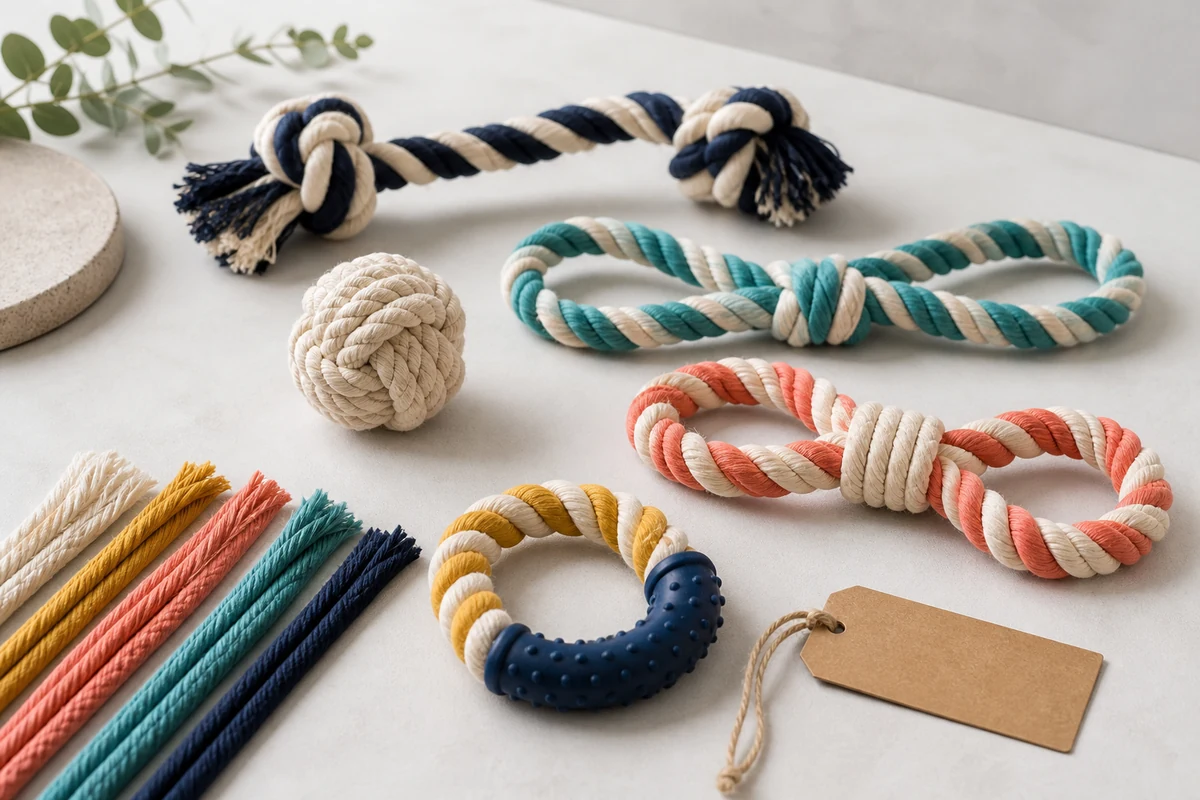
A lightweight rope ring for small dogs is not the same product as a thick multi-knot tug for large dogs. Define the target dog size, play style, supervision guidance, selling channel, and target price. This allows the factory to recommend a practical rope diameter, overall weight, and construction.
No pet toy is indestructible. Product copy and packaging should provide suitable supervision, inspection, and replacement guidance rather than absolute durability claims.
Cotton is popular for its familiar appearance and soft hand. Cotton blends can change strength, color consistency, and cost. Polyester supports bright colors and lower moisture absorption, while other fibers or recycled-content options require clear composition and claim documentation.
Ask for the fiber composition, yarn construction, dye method, and any required material testing. If the product uses several colors or fibers, record each component in the specification.
Twisted strands create a classic texture and can be formed into knots, balls, rings, and handles. Strand count, twist direction, and tightness influence appearance and fraying behavior.
Braided constructions can provide a flatter or more controlled surface. They may suit handles, loops, or products that combine rope with fabric sections.
Several rope diameters, fabric panels, rubber elements, or plush components can create a differentiated product. Every additional material and connection point should be included in testing and inspection.
| Specification | Why it matters |
|---|---|
| Rope diameter | Influences grip, weight, scale, and material use |
| Finished length | Controls use, packaging, and collection consistency |
| Knot dimensions | Affects symmetry, firmness, and loose-end length |
| Finished weight | Supports consistent size and material control |
| Loop opening | Influences handling and product function |
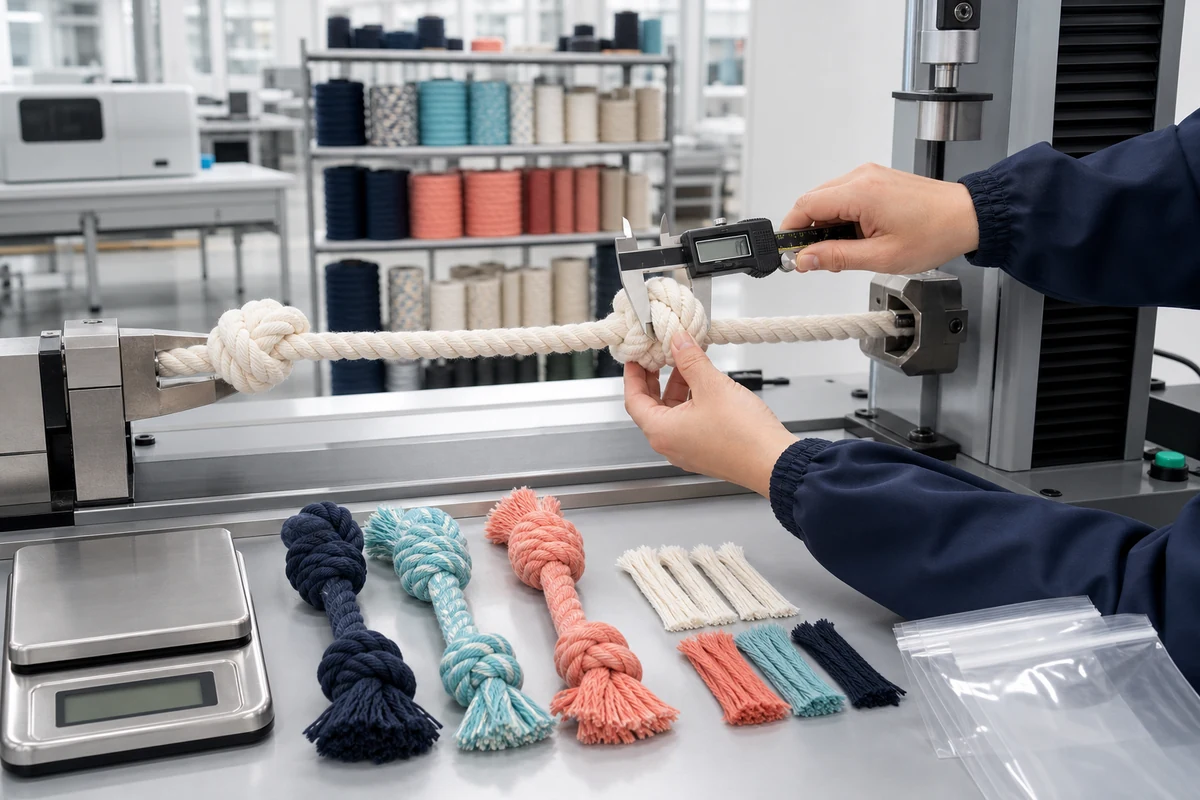
Because knots compress material, the cut length before tying is different from the finished length. Approve measurements on the completed toy and define reasonable tolerances.
Natural cotton, solid colors, twisted color combinations, and brand palettes can all work. Provide Pantone references when exact brand direction matters, but understand how fiber texture and dyeing affect the visible result. Approve a physical rope or sample rather than relying only on a screen color.
For a seasonal range, document the strand order and color ratio. This prevents a reorder from using the correct colors in the wrong arrangement.
Branding options may include a woven loop label, sewn fabric tag, cardboard hang tag, belly band, printed pouch, or branded component. A sewn label should be positioned and attached so it does not interfere with use or create an unintended loose element.
Packaging often provides the clearest branding space because the rope surface is textured and constantly handled. Use it for product name, size guidance, materials, care, supervision, barcode, and brand story.
The testing plan should reflect materials, construction, intended use, target market, and buyer requirements. It may include material checks, dimensions, weight, reasonable pull or seam tests, colorfastness expectations, and visual inspection. Agree on test methods and acceptance criteria before production.
During pre-shipment inspection, sample multiple cartons and SKUs. Repeated issues such as loose knots, excessive variation, contamination, or incorrect labeling should be recorded and corrected before shipment.
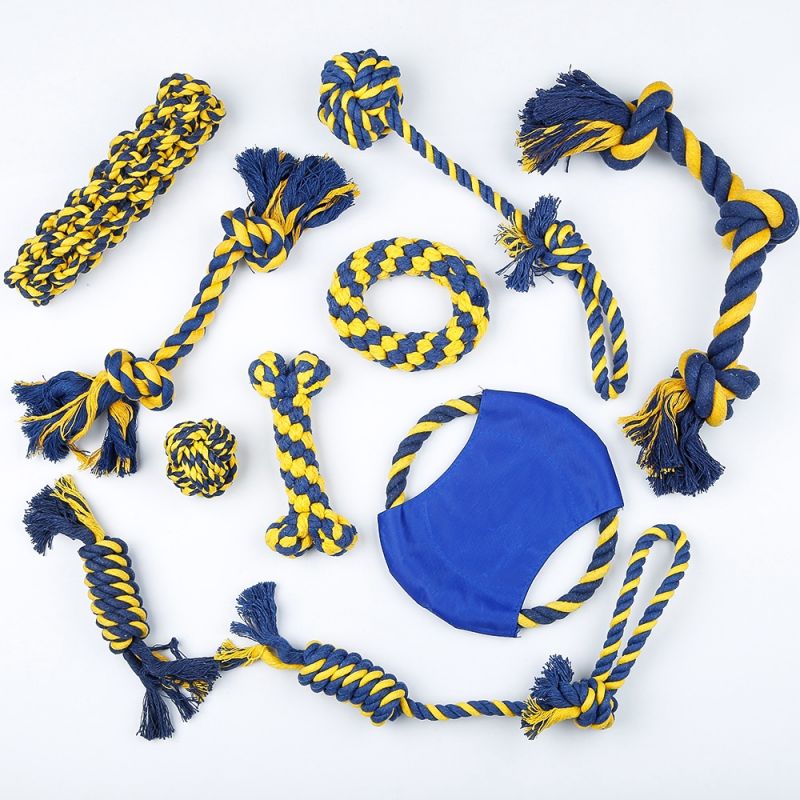
A focused range can include a ball, ring, two-knot tug, handle toy, and mixed plush-rope design using the same color system and packaging. Different sizes should be visually related but proportioned for the intended dog range. Explore Fun Pet's rope toy category for product directions.
Fun Pet can develop private label rope toys and coordinated pet toy ranges from a clear specification. Start an OEM quote with your artwork, dimensions, colors, quantities, packaging, and required delivery date.