Views: 302 Author: Publish Time:2026-08-12 09:30:00 Origin: Fun Pet
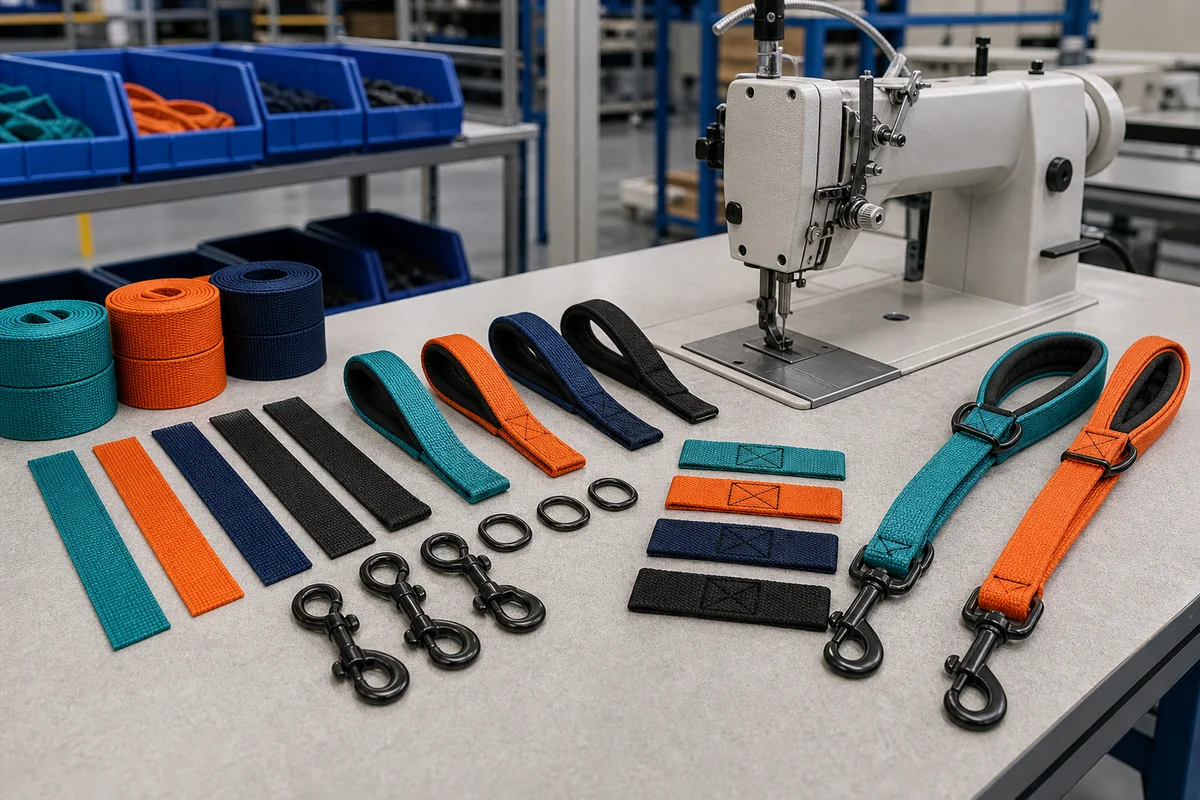
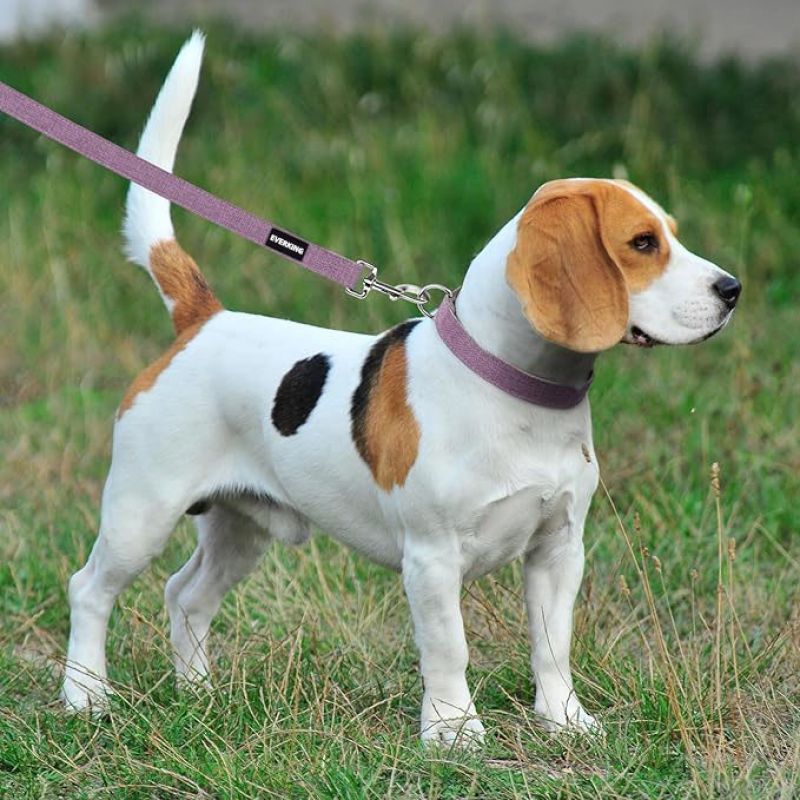
The hook is one of the smallest parts of a leash, but it strongly affects weight, handling, appearance, cost, and the user's impression of quality. A reliable custom dog leash hardware specification should connect the hook, D-rings, adjusters, rivets, webbing, stitching, and intended dog range rather than selecting each component independently.
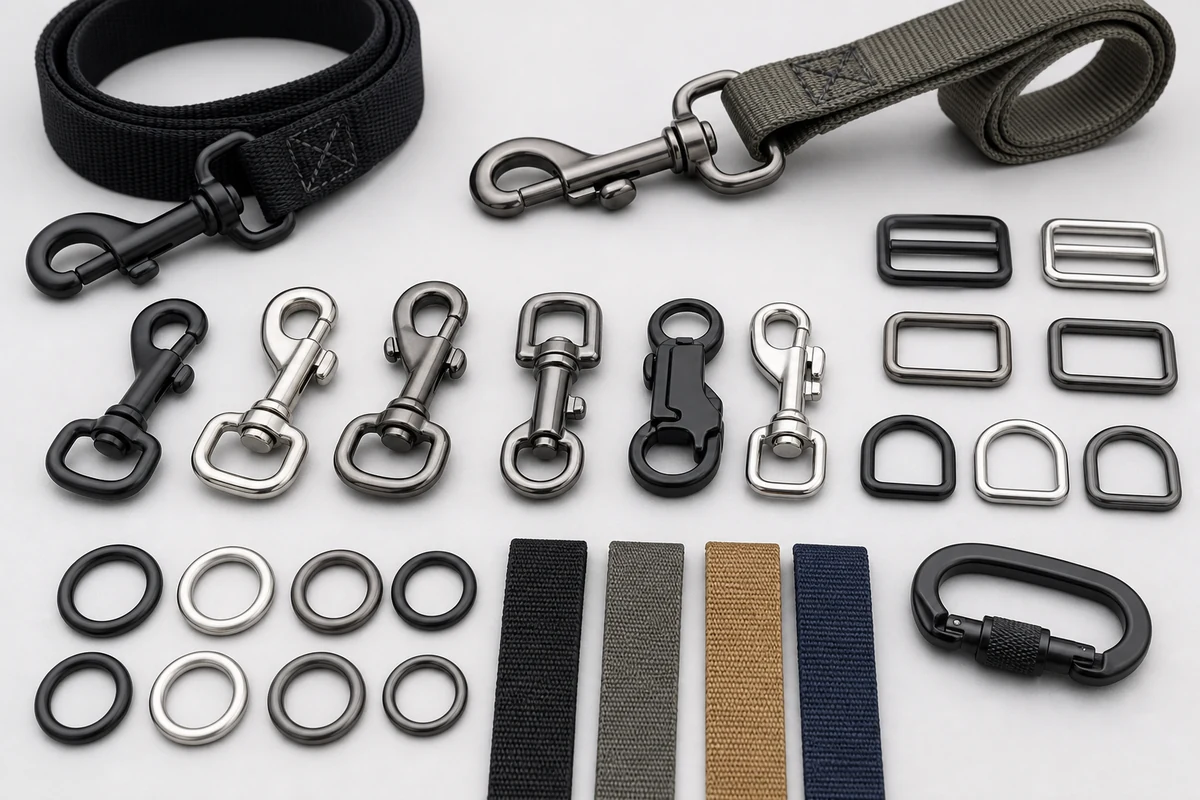
A lightweight city leash, double-handle training lead, long line, hands-free leash, traffic lead, and multipurpose adjustable leash do not need the same hardware. Record finished length, webbing width, target weight, expected environment, handle design, attachment points, and whether the product will be sold as part of a matching set.
Browse Fun Pet's custom dog leash range to identify a base construction. Reference samples can guide the shape, but the bulk specification should define measurable component details.
| Hook style | Typical advantage | Points to review |
|---|---|---|
| Standard swivel snap | Familiar operation and broad availability | Gate opening, swivel movement, body size, finish, and weight |
| Trigger snap | Compact profile and easy one-hand use | Spring action, thumb clearance, gate alignment, and plating |
| Locking carabiner-style hook | Added closure control and technical appearance | Lock operation, orientation, weight, cycle testing, and user instructions |
| Frog-style quick-release hook | Distinctive premium look and rapid attachment | Mechanism quality, opening pressure, cost, weight, and intended use |
No style is automatically best. A large heavy hook can overpower narrow webbing and small-dog products, while a compact hook may not suit a wide heavy-duty lead. Ask for component drawings, material information, sample weights, and available test data before approving the final choice.
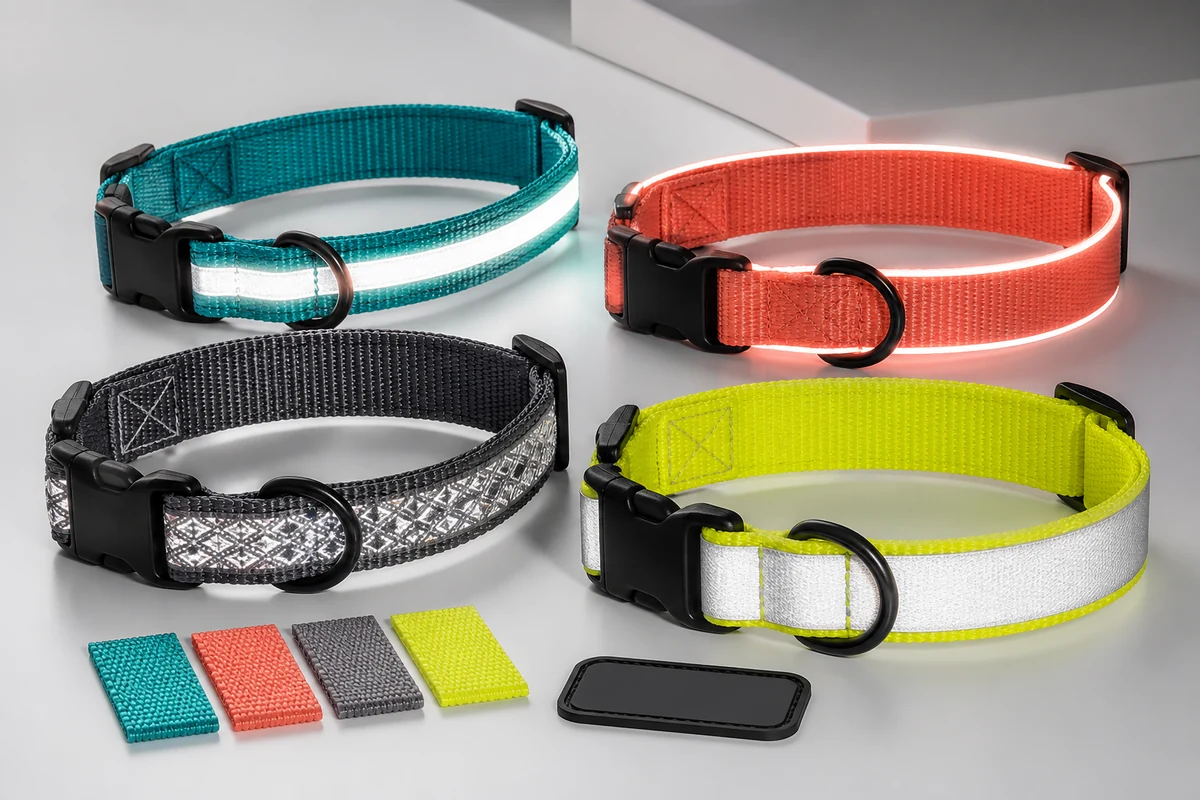
Zinc alloy, stainless steel, aluminum alloy, iron, and brass-based components have different weight, cost, appearance, and corrosion characteristics. Surface options may include polished metal, nickel color, black, gunmetal, rose gold, antique finishes, painted colors, or plated custom shades.
Finish approval should use a physical reference when appearance matters. Compare several production components under consistent light and check high-contact areas after operation. A decorative finish may show normal wear differently from a plain stainless component, so define acceptable appearance with the intended product positioning in mind.
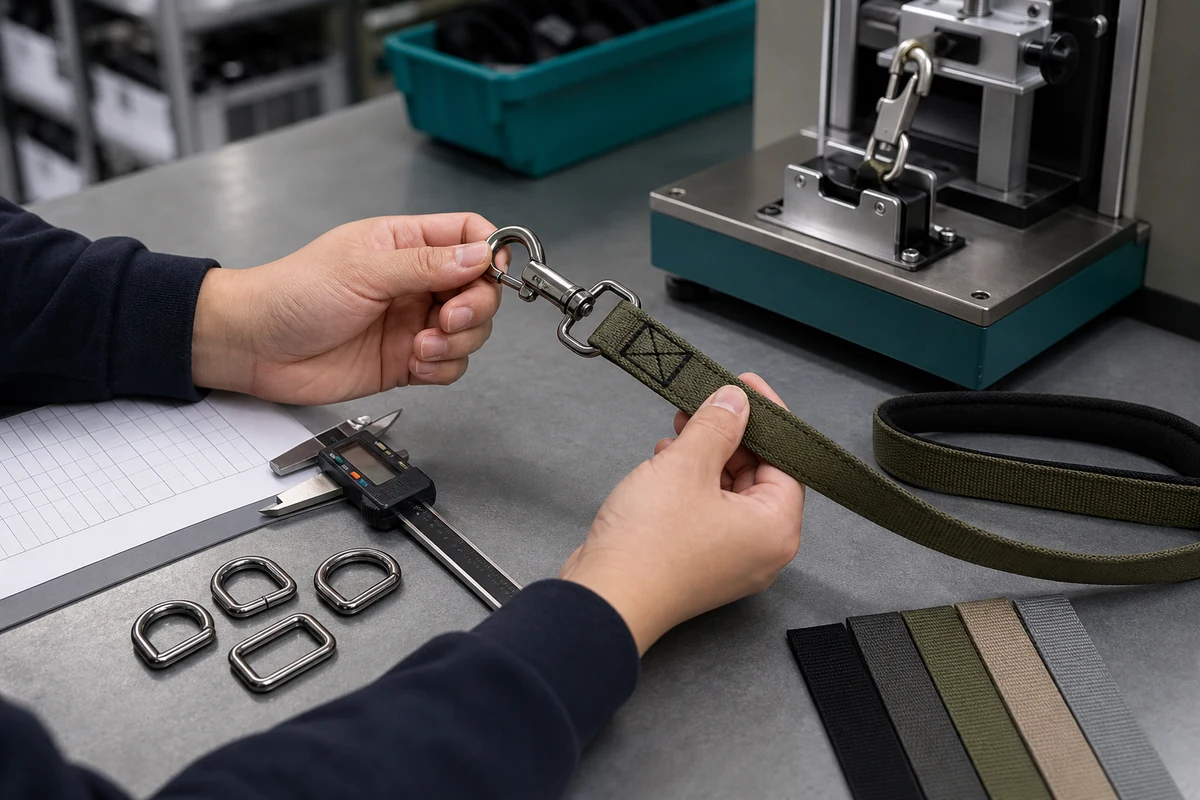
The internal opening of a hook, ring, or adjuster should fit the finished webbing stack without pinching or excessive movement. Record both nominal webbing width and finished thickness, especially when the leash uses padding, folded layers, printed facing, or coated material. The sewing pattern must also leave enough clearance for the component to rotate and operate.
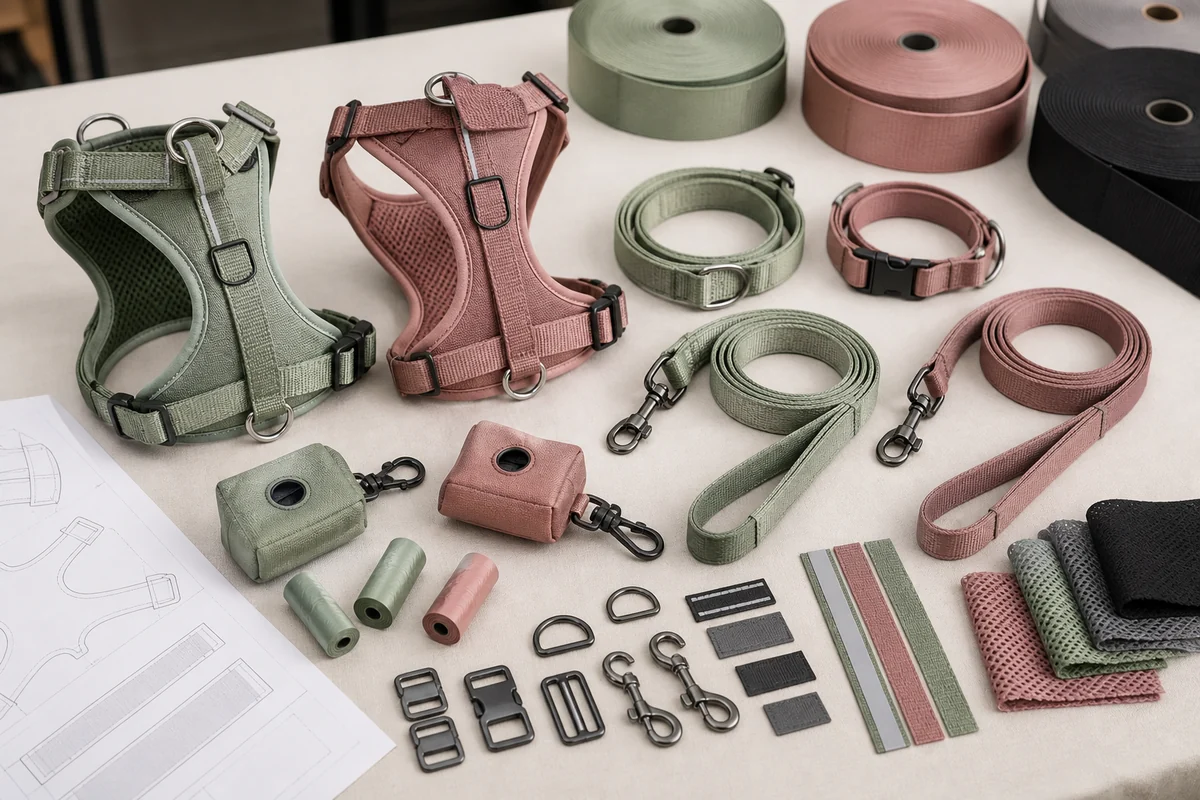
Use consistent dimensions across the matching dog collar and leash set when appropriate, but do not force identical hardware if the functional loads differ.
A padded handle adds comfort but also changes sewing thickness and fold length. A traffic handle needs enough opening for the intended user while remaining compact. D-rings for waste-bag holders, keys, or hands-free conversion should be positioned where accessories do not interfere with grip or drag against the dog.
For adjustable or multifunction leashes, map every configuration with a diagram. Confirm that clips face the correct direction and that rings remain accessible when the leash is shortened or worn around the body.
Visual inspection cannot confirm all functional requirements. Depending on the specification, checks may include component dimensions, gate opening, spring return, swivel rotation, operation cycles, seam strength, static pull, corrosion exposure, and coating adhesion. The test method, fixture, load, duration, sample quantity, and acceptance criteria should be agreed before production.
A casual hand pull is not a substitute for a controlled test. At the same time, one test number should not be marketed as a universal safety claim. Product use, wear, maintenance, dog behavior, and assembly all affect real-world performance.
Branding options include woven labels, rubber patches, embroidery, screen printing, heat transfer, laser marking, and engraved metal parts. Keep logos clear of high-fold areas, moving joints, gate mechanisms, and critical stitch patterns. Branded hardware may require tooling or higher component minimums, while a patch or label can be more flexible for smaller programs.
Operate every hook and adjuster, measure the leash, inspect both sides of the stitching, and review the product under tension. Check edges, burrs, plating, welds, swivel movement, padding, labels, and packaging. If the leash belongs to a set, compare color and finish across all pieces.
Record the approved hook model, ring dimensions, material, finish, webbing construction, thread, stitch pattern, logo, and packaging. Photos alone are not enough for repeat orders.
Share the complete leash drawing and component requirements so options can be compared on the same basis. Request a custom dog leash quote from Fun Pet with your target style, quantity, artwork, hardware preference, packaging, and destination.