Views: 316 Author: Publish Time:2026-09-04 10:20:00 Origin: Funpet
Custom cooling dog beds need a clear performance concept. Breathable fabrics, spacer mesh, cool-touch textiles, removable inserts and elevated airflow designs each manage heat differently. For a private label cooling dog bed, buyers should define the intended environment, construction and test method before choosing marketing claims.
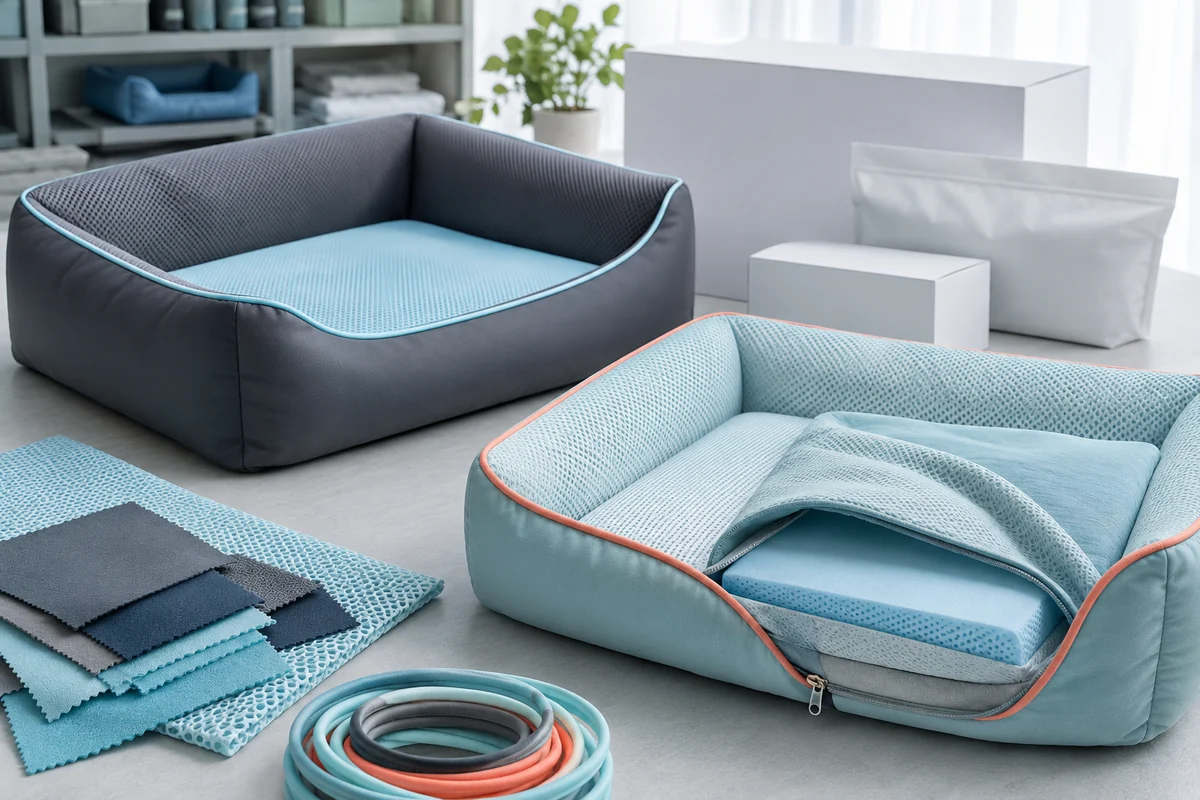
A breathable mesh surface supports air movement and can suit warm indoor environments. Cool-touch woven or knitted textiles may provide a cooler initial hand feel. Removable gel-style or phase-change inserts can offer another route but require careful containment, labeling and use instructions. Elevated beds increase airflow below the pet and use a different frame-based construction.
The right option depends on climate, duration of use, dog size, chewing risk, care method, shipping conditions and target price. Avoid treating all cooling products as equivalent. Ask the manufacturer to describe the material and construction behind the proposed function.
| Material direction | Role | Sample checks |
|---|---|---|
| Spacer or air mesh | Promotes airflow and reduces a dense surface feel | Thickness, compression, snagging, abrasion and drying |
| Cool-touch knit or woven | Provides selected thermal and hand-feel properties | Composition, test data, pilling, colorfastness and care |
| Moisture-management textile | Supports evaporation and quicker drying | Absorption, wicking method, wash durability and odor |
| Coated or waterproof liner | Protects foam or inserts | Seam leakage, noise, flexibility and breathability |
Approve fabric on the finished bed because quilting, backing and tension can change the surface. Where a performance claim is required, agree on an appropriate test and documentation rather than relying only on touch.
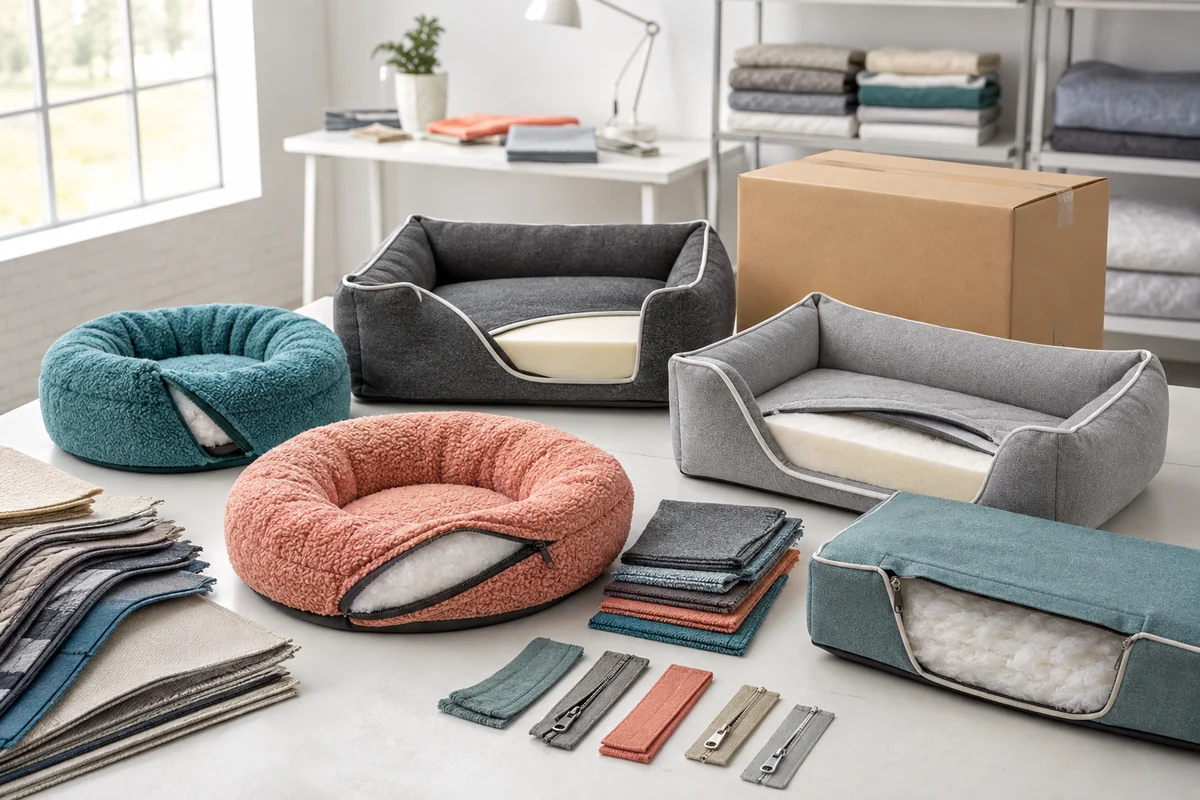
An insert pocket should secure the component, distribute it evenly and prevent direct access during normal use. Define insert dimensions, material, fill, seal, sleeve, zipper or closure and replacement method. Inspect sealing edges and any valves or caps, and consider the behavior if the outer cover is damaged.
Use instructions should state how the insert is prepared, placed, cleaned, stored and inspected. Suitability depends on the product design and market requirements. Claims about temperature, duration or safety should be supported by the agreed specification and evidence.
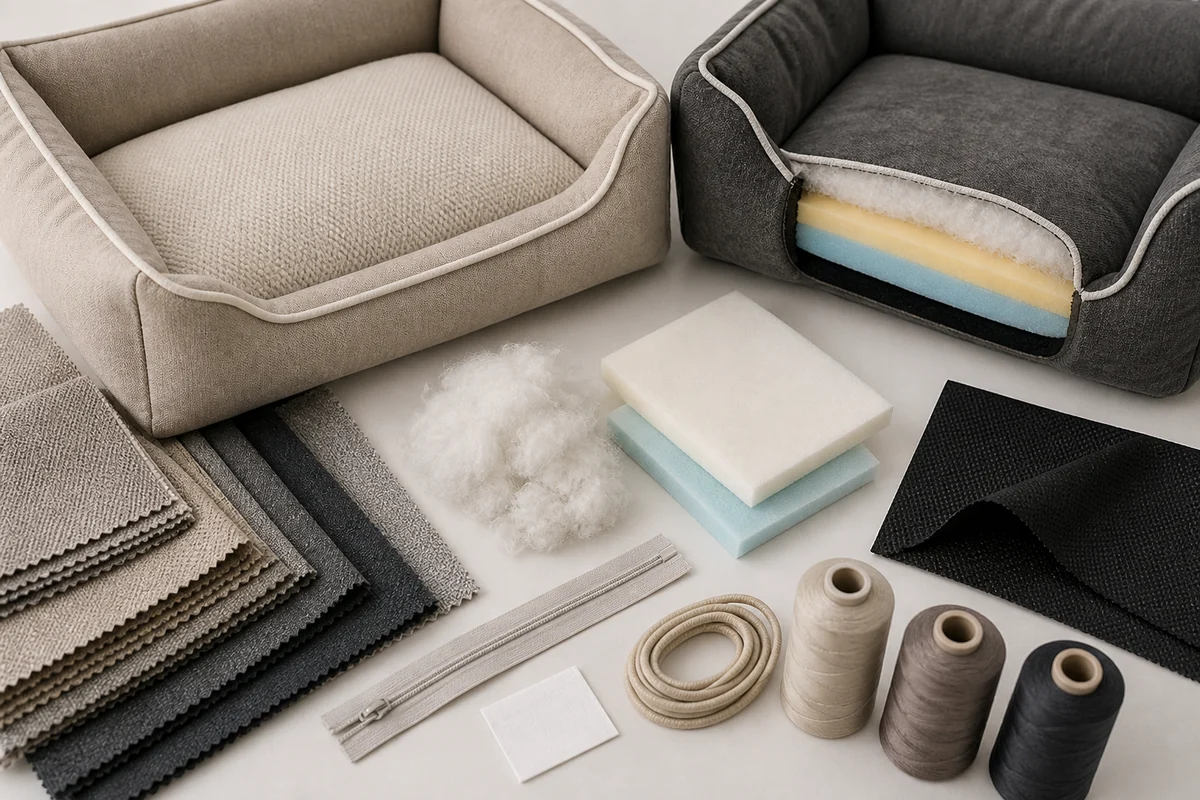
A cool surface still needs appropriate support. The bed may use solid foam, layered foam, fiber or an elevated frame below the cooling layer. Record thickness, firmness, edge shape and recovery. For bolster designs, consider whether the walls restrict airflow or add comfort for dogs that lean while resting.
Use numeric dimensions rather than generic size names. Review the pet bed range to select a platform, then test small and large sizes for surface tension, cover fit and insert position.
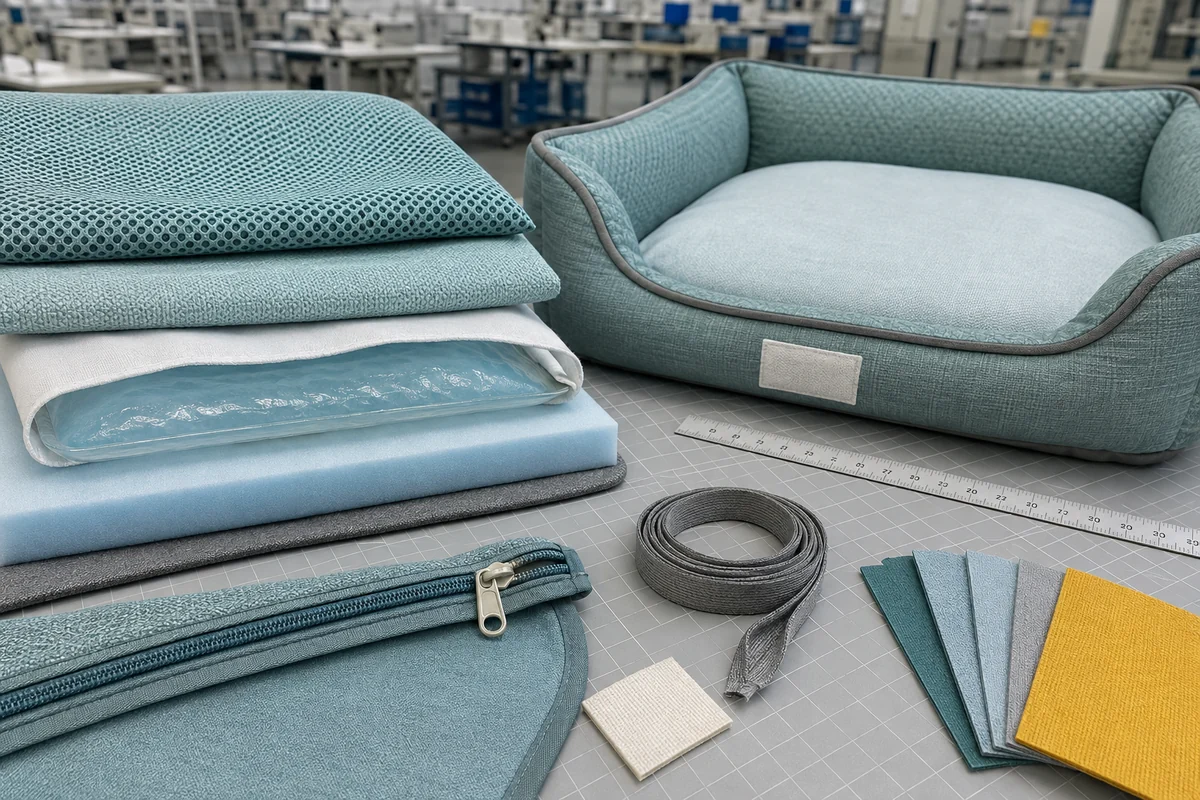
Branding can use woven labels, printed labels, embroidery, heat transfers, packaging sleeves or printed cartons. Place labels away from the main resting area and define dimensions and orientation by size. Match thread, piping and zipper colors to approved references.
Packaging should explain care and use in plain language. If the insert is removable or replaceable, include a clear component list. Barcodes and SKU labels must distinguish bed size, color and insert version. The broader pet bed sourcing guide provides additional planning for samples and bulk production.
Possible checks include dimensions, surface appearance, seam strength, zipper operation, cover removal, insert fit, leakage where relevant, fabric performance, wash appearance, odor and packed recovery. Define the test method, sample condition and acceptance criteria before production.
For shipping, consider heat exposure, prolonged storage and compression. Approve unit packaging and carton configuration using the complete bed. A final inspection should sample across sizes and colors and verify all care inserts and labels.
No. Breathable mesh, cool-touch textiles, moisture-management fabrics and elevated structures are other approaches. The specification should explain the intended mechanism.
Yes, when the pocket, closure, insert dimensions and care process are designed together. The finished sample should be checked for access, fit and normal-use security.
It should use the intended fabrics, insert, support, construction, label and package so performance and presentation can be reviewed as a complete product.
Request a custom cooling dog bed quote with the cooling concept, dimensions, fabrics, insert details, quantity and target market. Fun-Pet can recommend a sample path based on the complete brief.