Views: 4 Author: Publish Time:2026-10-22 16:44:35 Origin: Funpet
Choosing the right dog harness manufacturer is an important decision for pet brands, wholesalers, retailers and distributors. A reliable supplier does more than produce a harness according to a drawing. The right manufacturing partner should understand fit, materials, hardware, customization, quality control, packaging and the requirements of your target market.
Whether you are developing a new pet accessories collection or expanding an existing product line, evaluating a manufacturer carefully can help reduce development delays, quality issues and unnecessary costs.
This guide explains the main factors B2B buyers should consider when selecting a custom dog harness manufacturer for OEM, ODM, wholesale or private label projects.
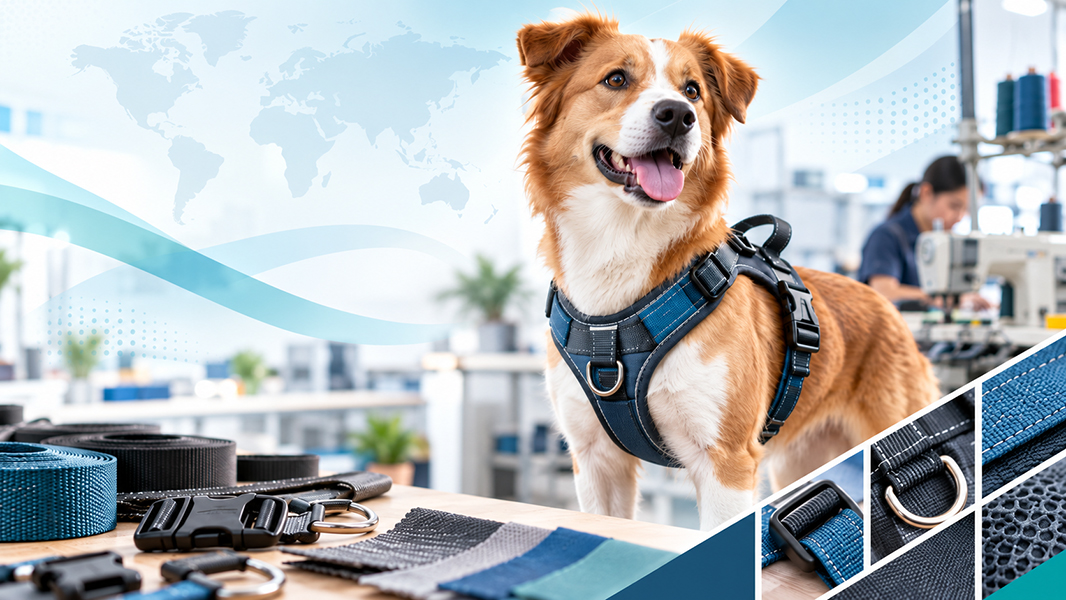
Before contacting manufacturers, prepare a clear product brief.
Your requirements should ideally include:
Harness style
Target dog sizes
Materials
Color or print
Webbing width
Buckle type
D-ring position
Padding requirements
Logo method
Packaging
Expected order quantity
Target market
Dog harnesses can vary significantly in construction. Common styles include:
Step-in dog harnesses
No-pull dog harnesses
Vest-style harnesses
H-style harnesses
Mesh dog harnesses
Neoprene dog harnesses
Tactical-style harnesses
Providing clear specifications allows the manufacturer to recommend suitable materials, construction methods and pricing.
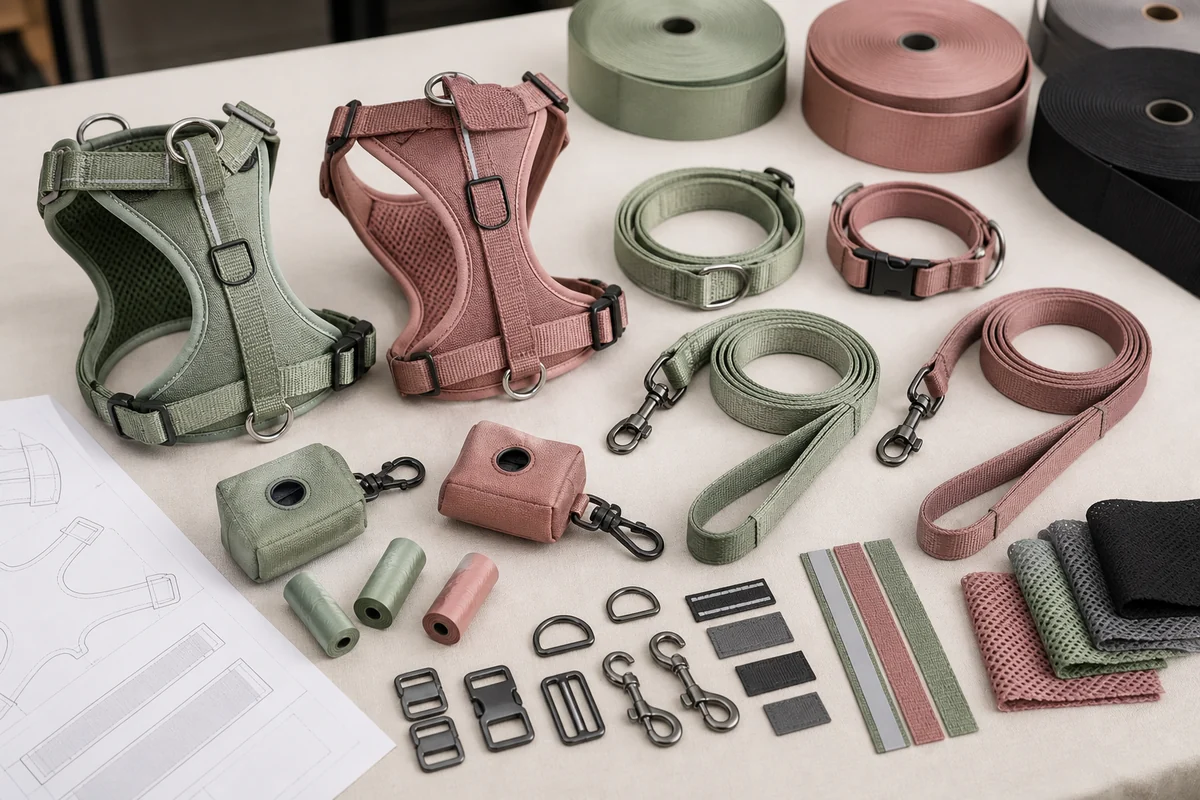
For buyers creating a complete walking collection, it is also useful to decide whether the harness needs to match a dog leash, collar or poop bag holder.
Not every sewing factory has experience manufacturing pet products.
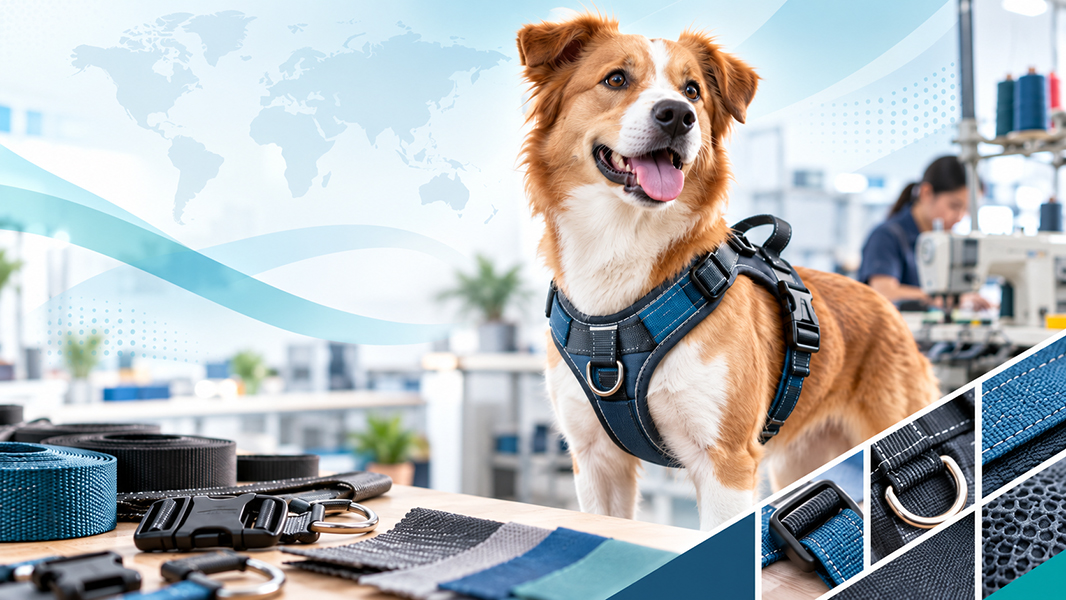
A professional dog harness manufacturer should understand the specific construction requirements of pet accessories, including strap adjustment, buckle placement, stitching reinforcement and hardware selection.
When evaluating a supplier, ask to review similar products they have manufactured before.
Look for experience with:
Adjustable harness construction
Different dog size ranges
Reinforced stress points
Padded panels
Breathable mesh
Neoprene materials
Polyester or nylon webbing
Reflective materials
Metal and plastic hardware
Matching leash and collar collections
A manufacturer with existing pet product experience can often identify potential production issues before sampling begins.
Material selection affects comfort, appearance, durability and product positioning.
Polyester is commonly used for printed dog harnesses because it supports a wide range of colors and patterns. It is suitable for brands creating fashion-focused or seasonal collections.
Nylon webbing is strong and widely used in collars, leashes and harness straps. It works well for products where durability and daily use are priorities.
Neoprene provides a soft and padded feel. It is frequently used for premium walking sets and harnesses designed for comfort.
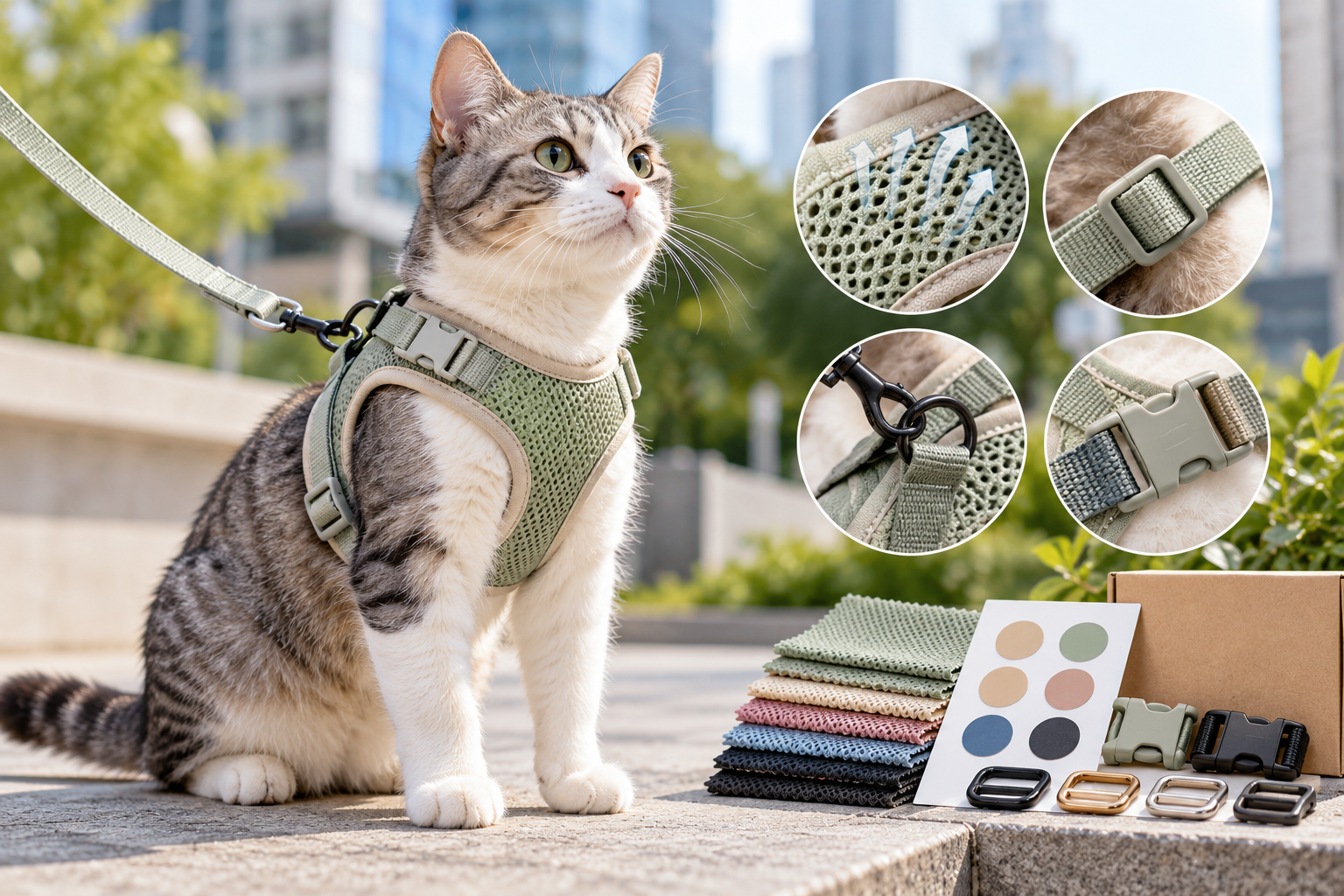
Breathable mesh can help create lightweight harnesses suitable for warmer weather or smaller dogs.
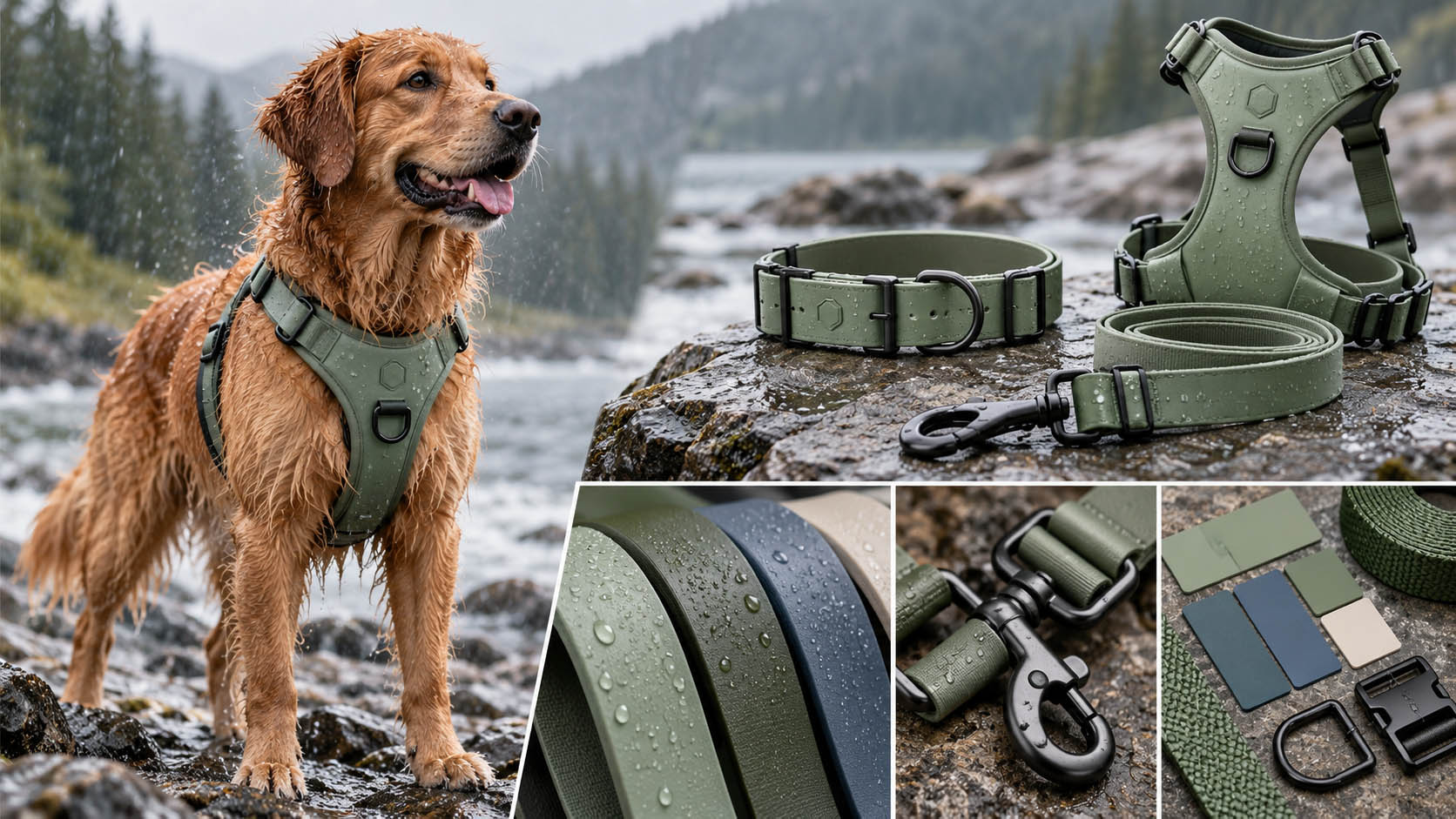
Coated webbing and other water-resistant materials are popular for outdoor pet collections because they are easier to clean and maintain.
Your OEM dog harness manufacturer should help you compare materials based on your product positioning, target price and intended use.
Customization is especially important for pet brands that want to differentiate their products.
A capable custom dog harness manufacturer should support several customization options.
These may include:
Brands can develop products using selected color references or coordinate colors across an entire walking collection.
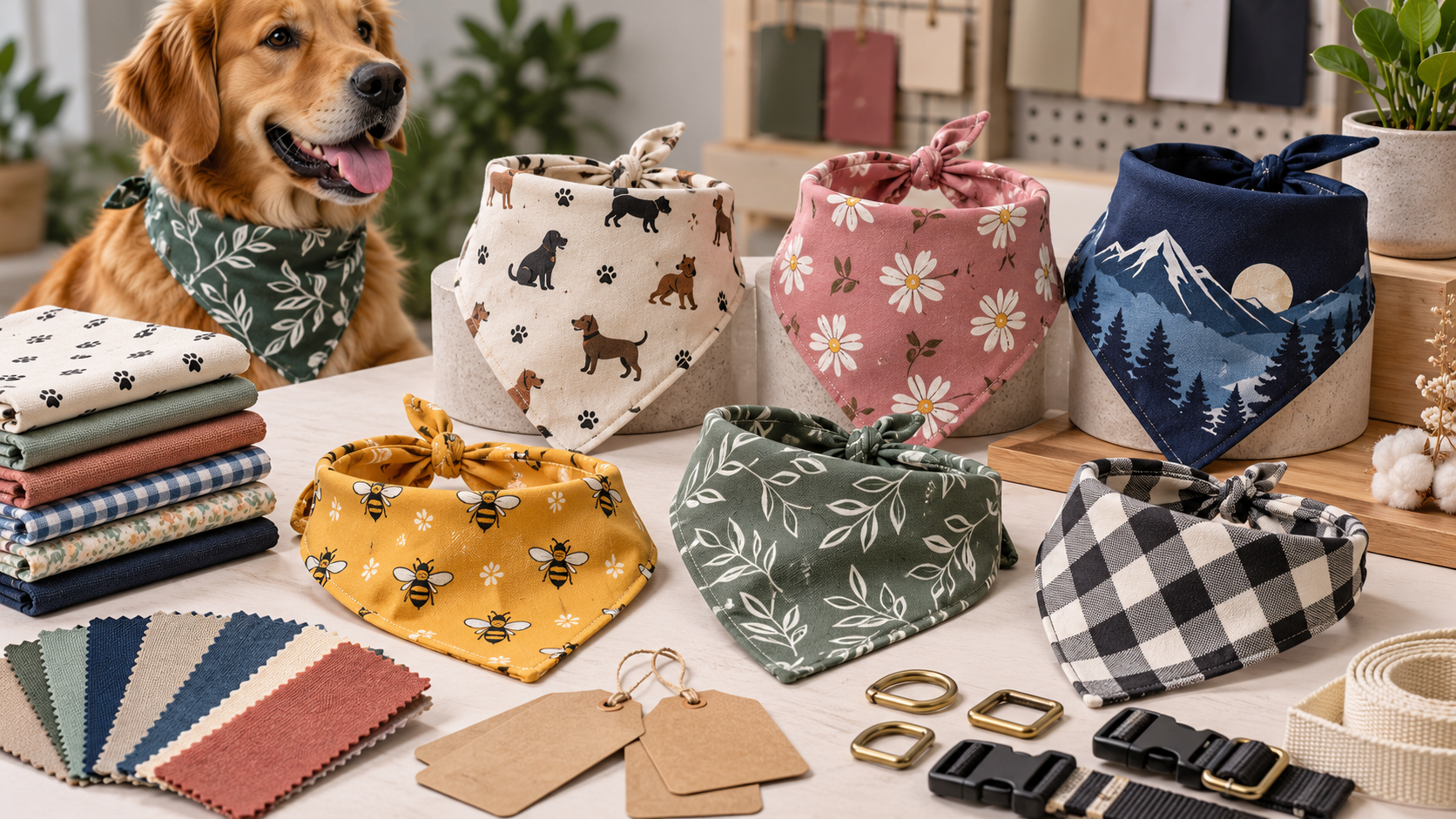
Patterns can be developed for harness panels, webbing or fabric sections depending on the construction.
Common branding methods include:
Woven labels
Rubber logo patches
Heat transfer logos
Printed logos
Embroidery
Customized packaging
The best logo method depends on the harness material, logo size and desired appearance.
Depending on quantity and project requirements, brands may also customize buckle colors, metal finishes or other components.
For a coordinated collection, make sure the supplier can maintain consistent colors and branding across harnesses, collars and leashes.
MOQ, or minimum order quantity, is an important consideration when sourcing custom pet products.
There is not always a single MOQ for the entire project.
Minimum quantities may depend on:
Harness style
Fabric
Custom printing
Webbing
Hardware
Logo
Packaging
Color
Size distribution
For example, a manufacturer may support a relatively low product MOQ while a custom printed material requires a higher minimum production quantity.
Ask your supplier exactly where each MOQ applies.
For new brands, starting with existing constructions and customizing colors, logos or packaging can sometimes reduce development complexity compared with creating an entirely new structure.
Sampling is one of the most important stages of custom dog harness development.
A good sampling process allows you to evaluate both appearance and function before mass production.
The first sample is usually used to check:
Harness construction
Dimensions
Strap positions
Adjustment range
Buckle placement
D-ring location
General fit
Changes from the first sample can then be incorporated into a revised version.
Before bulk production, confirm the final combination of:
Material
Color
Logo
Hardware
Size
Packaging
Keeping an approved reference sample helps both the buyer and manufacturer maintain the same production standard.
Dog harness sizing requires more attention than many other pet accessories.
A harness that looks attractive but does not fit correctly can create a poor customer experience.
Important measurements may include:
Neck circumference
Chest circumference
Strap width
Panel width
Adjustment range
The manufacturer should provide a clear size chart and use consistent measurement points.
If you are developing several sizes, evaluate how the proportions change from small to large products.
Simply enlarging every component at the same ratio may not always create the best result. Hardware, webbing width and panel shape may need to change between sizes.
Dog harnesses include several components that affect durability and everyday performance.
These may include:
Buckles
D-rings
Adjustment sliders
Webbing
Hooks
Stitching
Binding
Reinforcement points
Ask the manufacturer how these components are selected and inspected.
High-stress areas should use suitable stitching and reinforcement according to the product design.
For matching walking sets, also check whether the leash hook and harness D-ring are appropriately paired.
Quality control should be discussed before placing the bulk order, not after production is finished.
A professional dog harness supplier should have inspection procedures covering areas such as:
Product measurements
Sewing quality
Loose threads
Fabric defects
Logo position
Color consistency
Buckle operation
Strap adjustment
Hardware appearance
Packaging
Quantity
Your purchase specification should clearly define what has been approved so the production team has a consistent reference.
For custom projects, approved samples, color standards and packaging specifications can all become part of the quality control process.
For many brands, manufacturing is only one part of the project.
A private label dog harness manufacturer may also support:
Brand labels
Hang tags
Barcode labels
Poly bags
Retail packaging
Size stickers
Product inserts
Matching accessory packaging
Before production begins, provide final packaging artwork and confirm the required barcode, SKU and size information.
Packaging should also be checked during the final inspection to ensure that the correct product, size and label are packed together.
Good communication can significantly improve the efficiency of an OEM project.
Your supplier should be able to explain:
What information is required for quotation
Which materials are available
Which specifications can be customized
Sample requirements
MOQ
Production process
Packaging options
Lead time factors
For custom products, buyers and manufacturers usually need several rounds of communication before the specification is finalized.
A supplier that asks detailed technical questions at the beginning can often reduce misunderstandings later.
Price is important, but the cheapest quotation is not always the lowest-cost option in the long term.
When comparing dog harness manufacturers, consider the complete project:
| Factor | What to Evaluate |
|---|---|
| Product Experience | Previous dog harness and pet accessory projects |
| Materials | Fabric, webbing, padding and hardware options |
| Customization | Color, print, logo and packaging |
| MOQ | Minimum quantities for products and custom materials |
| Sampling | Prototype and pre-production process |
| Quality Control | Inspection standards and approved references |
| Communication | Response quality and technical support |
| Product Range | Ability to develop matching collars, leashes and accessories |
A reliable manufacturing partner can help your brand maintain consistent products across multiple orders and future collections.
Developing a successful dog harness requires the right combination of design, fit, materials, components, branding and quality control.
For pet brands, retailers and wholesalers, working with an experienced custom dog harness manufacturer can make product development more efficient and help maintain consistent standards from sampling to bulk production.
Fun Pet provides OEM and ODM support for custom dog harnesses and coordinated pet walking accessories, including collars, leashes and matching sets.
Customization options can include materials, colors, prints, logos, hardware and packaging based on your project requirements.
If you are planning a new dog harness collection, prepare the following information before requesting a quotation:
Harness style or reference image
Required sizes
Material preference
Color or artwork
Logo file
Packaging requirements
Estimated quantity
Target delivery schedule
A detailed product brief helps the development team provide more accurate recommendations, sampling plans and quotations.
Looking for a custom dog harness manufacturer for your next collection? Contact Fun Pet to discuss OEM, ODM, private label and wholesale dog harness solutions.