Views: 274 Author: Publish Time:2026-08-05 09:30:00 Origin: Funpet
Reflective details give a dog collar a clear functional story for evening walks, winter routines, urban customers, and outdoor collections. For brands sourcing custom reflective dog collars, the product must combine visible reflective placement with comfortable webbing, appropriate hardware, stable sizing, and a logo system that remains clear in daylight.
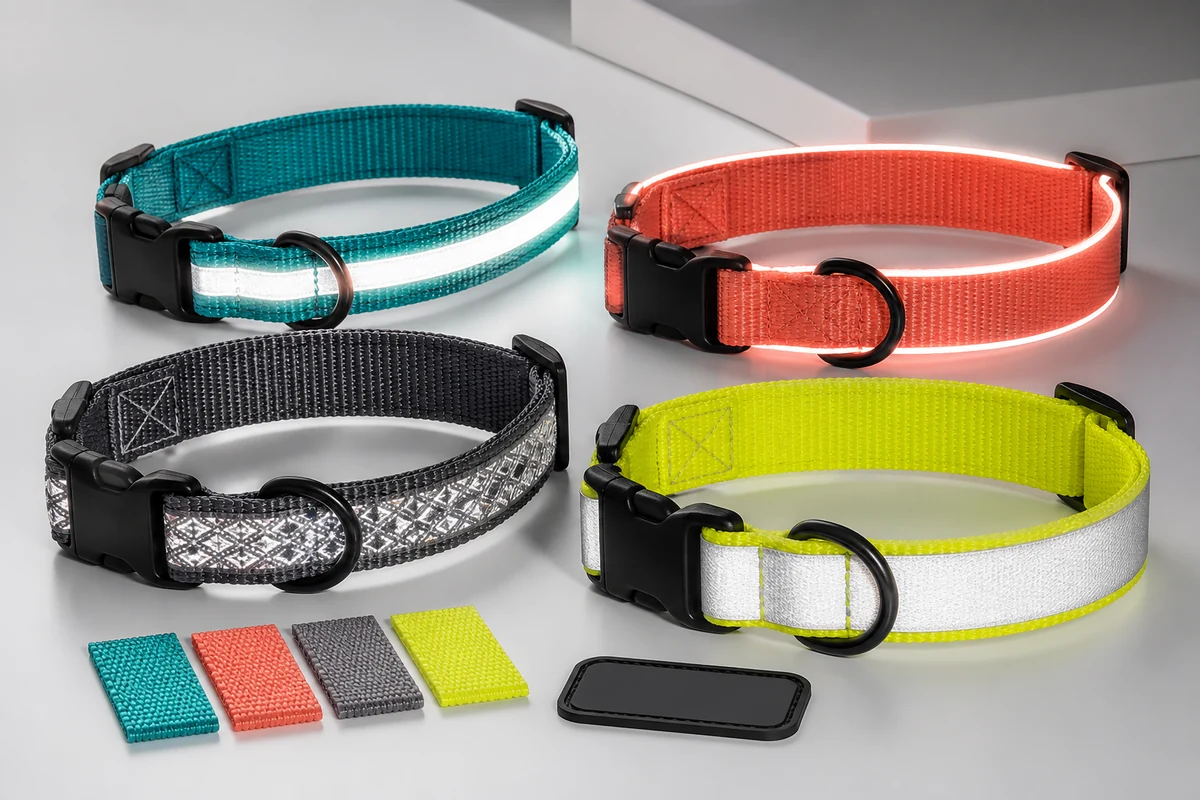
Reflective tape and yarn return light toward its source, making the product more noticeable when illuminated by headlights or a flashlight. Performance depends on material type, angle, condition, placement, and obstruction by fur. A collar should not be marketed as a complete safety solution; it is one visibility feature within responsible walking practices.
Define the intended claim and any required test method before production. Avoid using a reflectivity value unless it has been verified for the specific material and construction.
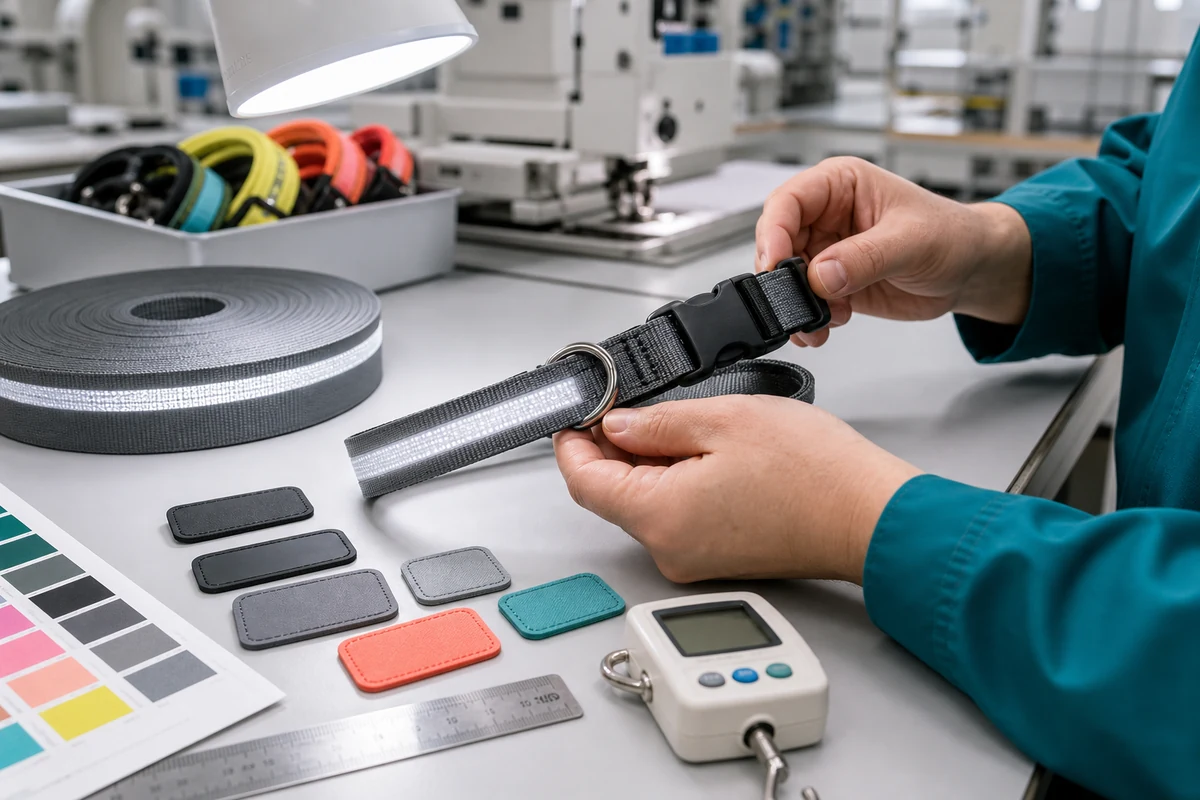
A separate reflective strip can create a strong, controlled line around the collar. Specify tape width, color, stitching, edge distance, and whether the tape continues beneath hardware. Narrow tape may be less visible, while very wide tape can make the collar stiff.
Integrated reflective yarn produces a subtle daytime appearance and can reduce added layers. Review the density and pattern because a few narrow threads create a different effect from a broad reflective band.
Printed motifs can support fashion-led collections and repeat patterns. Adhesion, flexibility, wash or rub expectations, and print coverage should be approved on the final webbing.
Webbing width and thickness should suit the size range. Neoprene or soft padding can improve hand feel and spread contact, but it also adds bulk and drying time. Check the collar at minimum and maximum adjustment to ensure folded layers do not create hard edges.
For long-haired dogs, a wider visible surface may be useful, but fit and fur coverage still influence the effect. Product photography should represent realistic wear rather than only a flat reflective test.
| Size detail | Reason to specify it |
|---|---|
| Finished length | Controls material use and overall proportions |
| Usable adjustment range | Helps customers choose the correct size |
| Webbing width | Affects comfort, hardware, logo space, and appearance |
| Hardware scale | Keeps small sizes light and large sizes proportionate |
| Tolerance | Creates a measurable inspection standard |
Use a measurement diagram that shows exactly where the finished collar is measured. Confirm whether the buckle length is included and how overlapping webbing is handled.
Side-release buckles may be plastic or metal. Plastic reduces weight and offers color flexibility; metal can add a premium feel but may increase weight and cost. Review buckle operating force, adjuster grip, D-ring dimensions, edge finish, and component color.
The D-ring and reinforcement should be evaluated as part of the assembled collar. A strong ring alone does not define the performance of stitching, webbing, or the full product.
Woven labels, rubber patches, embroidery, heat transfer, printed logos, laser-marked buckles, and metal plates can all support private label branding. Place the logo where it does not reduce the main reflective area, interfere with adjustment, or sit under the dog's neck.
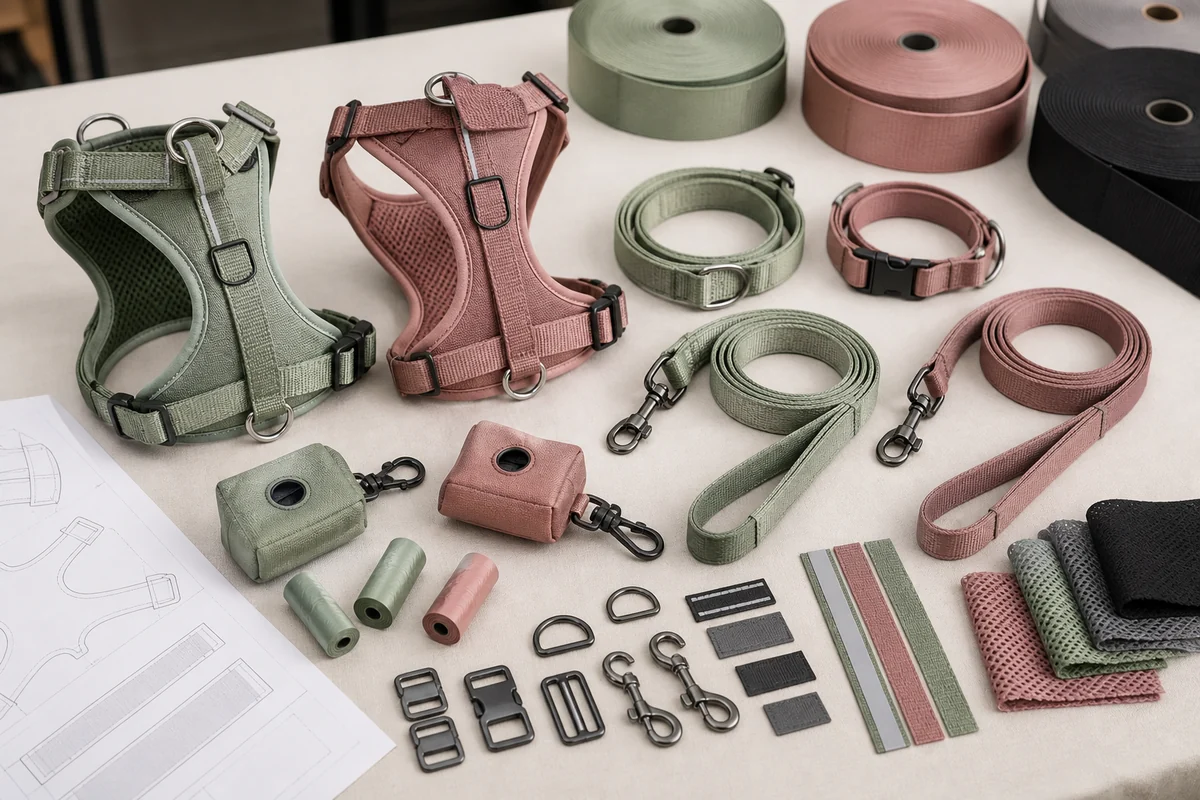
A matching leash or harness can repeat the reflective line, webbing color, hardware finish, and label. Browse custom dog collar options when planning the wider collection.
Use packaging to show the measurement method, adjustment guidance, material and care information, and a precise description of the reflective feature. Avoid absolute safety promises. A QR code can link to fitting instructions, matching products, or a short visibility demonstration.
Fun Pet supports OEM development for reflective collars and coordinated walking accessories. Request a factory quote with your target sizes, reflective method, logo, quantities, and packaging to plan the sample.