Views: 207 Author: Publish Time:2026-07-29 09:30:00 Origin: Funpet
Cat walking products need a different development approach from dog gear. Cats have flexible shoulders, compact body shapes, and a strong ability to reverse out of loose equipment. For a brand choosing a custom cat harness manufacturer, the commercial goal is to balance secure geometry, comfort, adjustability, visual identity, and repeatable sizing.

A cat harness should be developed around feline movement. The neck opening, chest connection, girth strap, back panel, and distance between adjustment points all influence security. If the front opening is too large, a cat may pull a leg through. If the body is too rigid, the product can restrict the shoulders or create pressure during crouching and jumping.
No harness can guarantee that every cat will never escape. A responsible product brief should use terms such as escape-resistant and should include fitting instructions. The design objective is to reduce gaps and unwanted movement when the harness is correctly sized and adjusted.
Strap harnesses are lightweight, compact, and easy to coordinate with collars and leashes. They offer multiple adjustment points and can suit brands that want lower shipping volume or a simple outdoor look. Strap placement and adjuster range must be checked carefully because narrow webbing can twist if the geometry is unbalanced.
A vest construction distributes contact over a wider area and creates more space for prints, labels, reflective trim, or brand patches. Breathable mesh can support warm-weather positioning. The pattern must allow shoulder movement and avoid excessive bulk around the front legs.
Step-in styles can be convenient for some owners, but the leg openings and back closure must fit consistently across sizes. Sampling should include realistic movement and adjustment checks rather than a flat measurement review alone.
Begin with the measurements that actually control fit: lower neck or upper chest circumference, girth behind the front legs, back length where relevant, and the space between the front legs. Weight may be included as a reference, but it should not be the only sizing method because cats with the same weight can have different proportions.
| Specification | Why it matters |
|---|---|
| Measurement points | Ensures the factory and customer measure the same location |
| Finished dimensions | Defines the actual product rather than a broad pet-weight estimate |
| Adjustment range | Shows how much variation each size can accommodate |
| Overlap between sizes | Helps customers choose when measurements fall near a boundary |
| Tolerance | Creates a measurable production acceptance standard |
Ask the manufacturer to identify where every dimension is measured on the finished harness. Use the same drawing in the technical pack, inspection sheet, size guide, and customer-facing instructions.
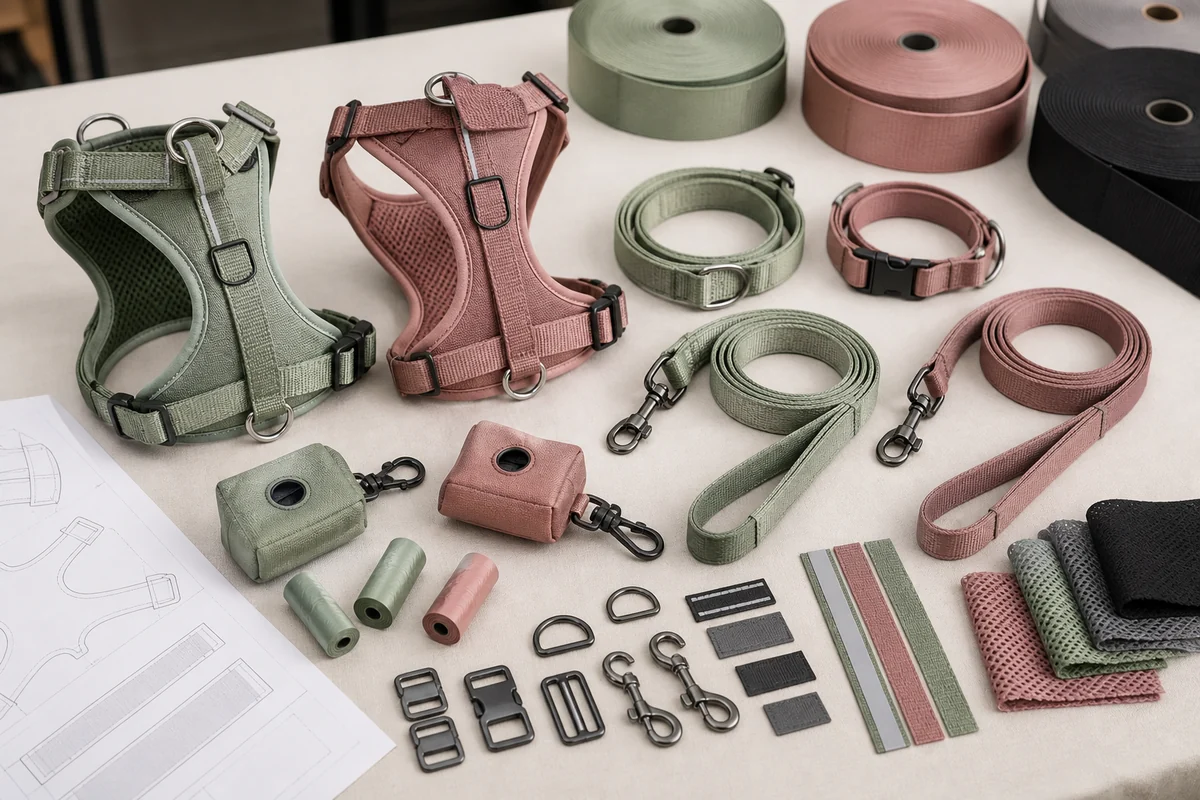
Polyester and nylon webbing are common for strap harnesses because they support color, printing, and consistent construction. Mesh and padded fabrics can improve perceived comfort, but thickness changes how the product sits and may require wider binding or different seam allowances. Neoprene can add softness and structure, although buyers should review weight, heat, stretch, drying time, and odor expectations.
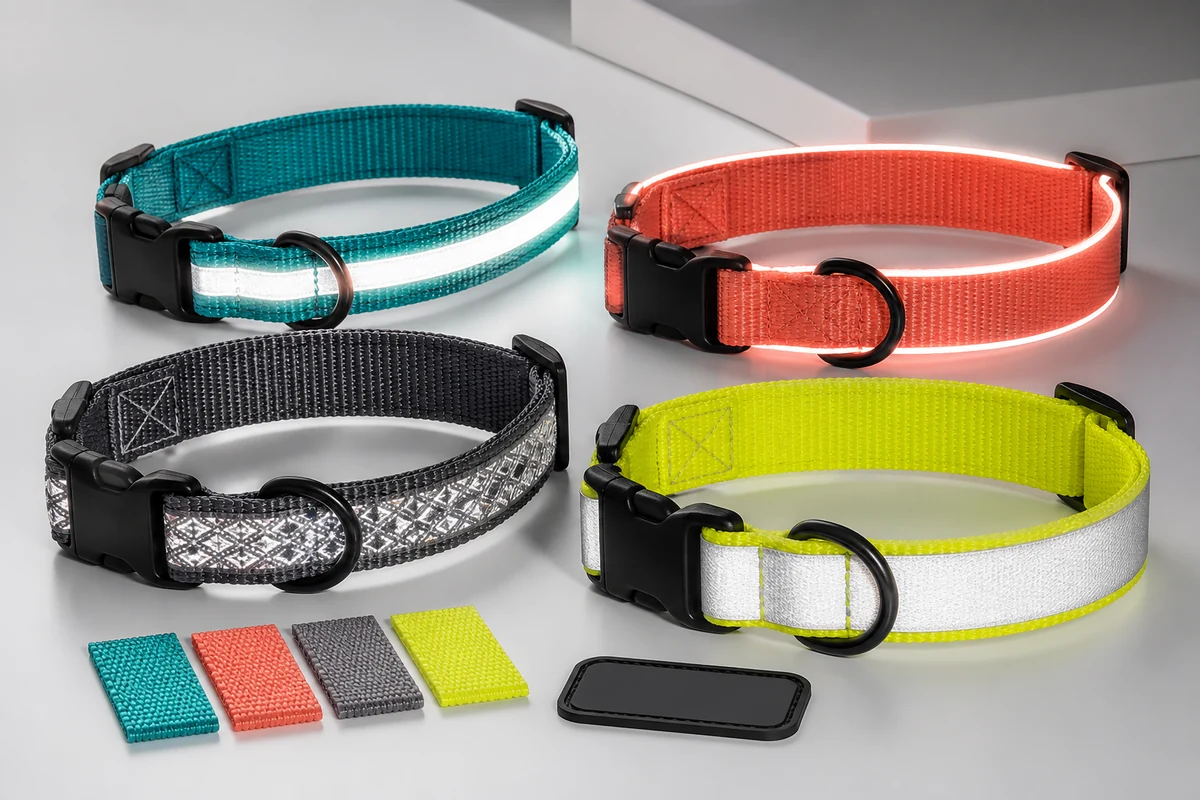
For printed collections, confirm pattern scale across all sizes. A motif that looks balanced on a medium sample may be cropped awkwardly on the smallest harness. For solid colors, approve the webbing, binding, thread, buckle, and logo together under neutral light.
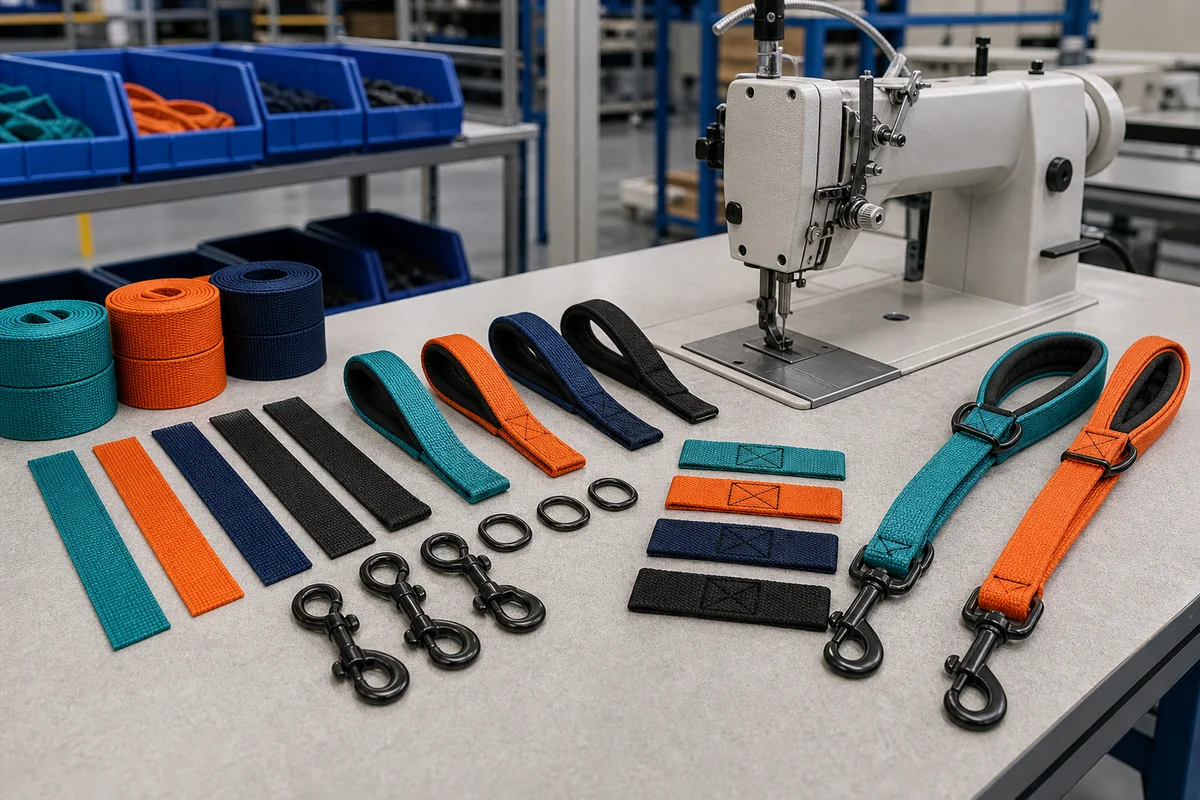
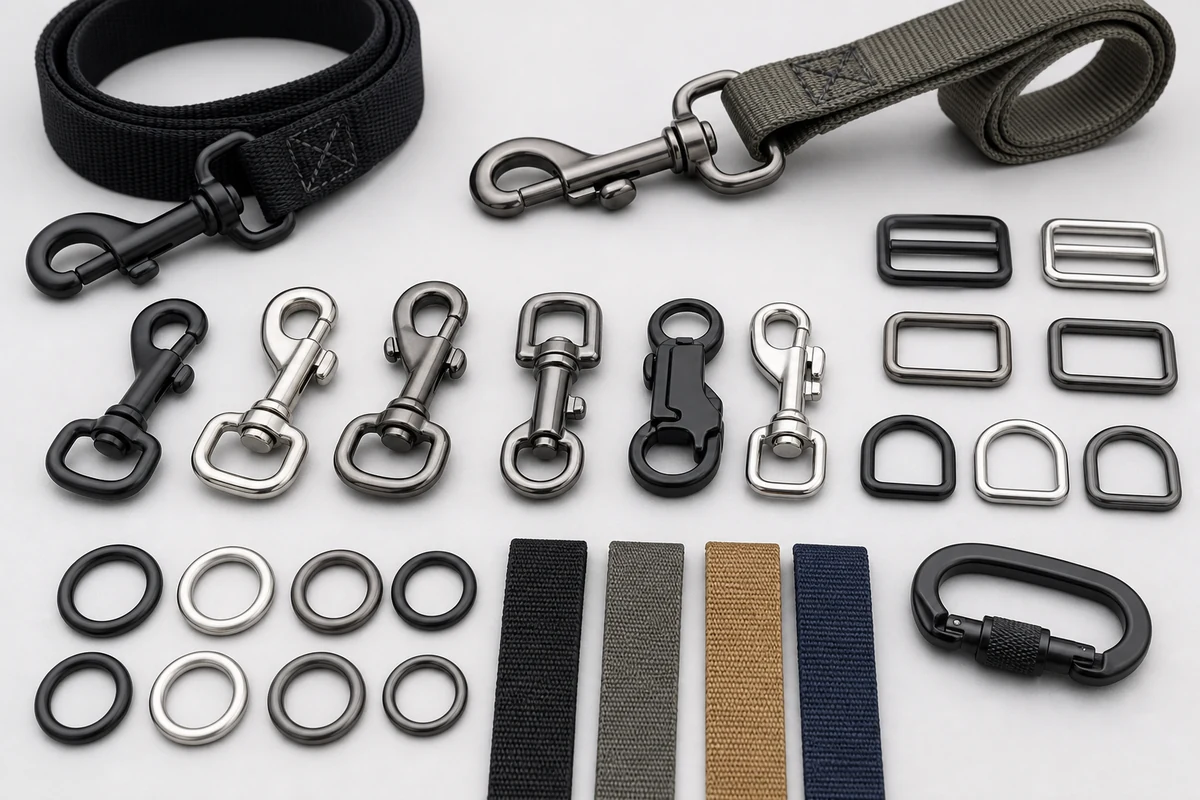
Cat harness hardware should feel proportionate to the product. Review buckle operating force, adjuster friction, D-ring position, ring thickness, and total finished weight. A secure metal component may look premium, but unnecessary weight can reduce comfort on smaller sizes. Plastic buckles and adjusters can be appropriate when the resin, dimensions, and assembly are selected for the intended use.
The leash connection should sit where it does not pull the harness into the throat or rotate the body excessively. Test the D-ring and reinforcement as part of the assembled harness rather than evaluating the ring alone.
Woven labels, rubber patches, heat-transfer logos, embroidery, and printed graphics can all work on cat harnesses. Placement should avoid adjustment zones, folds, high-friction edges, and areas that curve sharply on the body. A logo on the back panel is usually easier to see than one hidden under a strap.
For matching walking sets, use a consistent logo system across the harness, leash, collar, and packaging. Explore the broader cat harness and leash set collection when planning coordinated colors and hardware.
Document each trial with the cat measurements, sample size, strap settings, and photos. More than one size may be needed to confirm the grading logic before bulk production.
A cat harness benefits from clear fitting guidance. Packaging can include a measurement diagram, adjustment sequence, supervision notice, care instructions, materials, barcode, and brand story. If the item includes a leash, state the leash length, width, hook type, and whether the set is intended for walking or another use.
Fun Pet supports OEM and ODM development for cat harnesses and coordinated walking accessories. Request a factory quote with your artwork, target quantities, size plan, and reference product so the team can review sampling and production options.